Best Instagram Automation Tools 2026: 11 Tested, Ranked & Compared (Free + Paid)
Quick answer: The best Instagram automation tools in 2026 are QuickDM (best free plan + cheapest paid at ₹399/mo), ManyChat (best multi-channel flows), LinkDM (best for comment-to-DM volume), CreatorFlow (best DM-cap pricing), and InstantDM (best for safe high-speed delivery). All tested against Meta's official API rate limits.
Key Takeaways — At a Glance
- QuickDM is the only tool with a Free Forever plan that includes unlimited automations, follow-gating, and email collection — no credit card needed.
- Meta's official DM send limit is 100 calls/second for text; safe tools stay well under this.
- ManyChat's free tier dropped from 1,000 to 25 active contacts in 2026 — it is no longer a usable free plan.
- India users pay up to 10× more with global tools at USD pricing vs QuickDM's ₹399/month.
- Avoid any tool claiming "unlimited DMs" — this violates Meta's API rate limits and risks account bans.
- Per-contact billing (ManyChat model) punishes viral growth; volume-based billing (QuickDM, CreatorFlow, LinkDM) is fairer.
How We Evaluated These 11 Instagram Automation Tools

Choosing the right Instagram automation tool requires more than reading marketing pages. We personally set up live automation flows on each of the 11 tools reviewed in this article, connected them to real Instagram professional accounts, and ran controlled tests across a 30-day period in early 2026. Every claim about pricing, DM limits, and features was cross-checked against the tool's live product interface, not just its landing page copy.
Our 7-Point Testing Framework
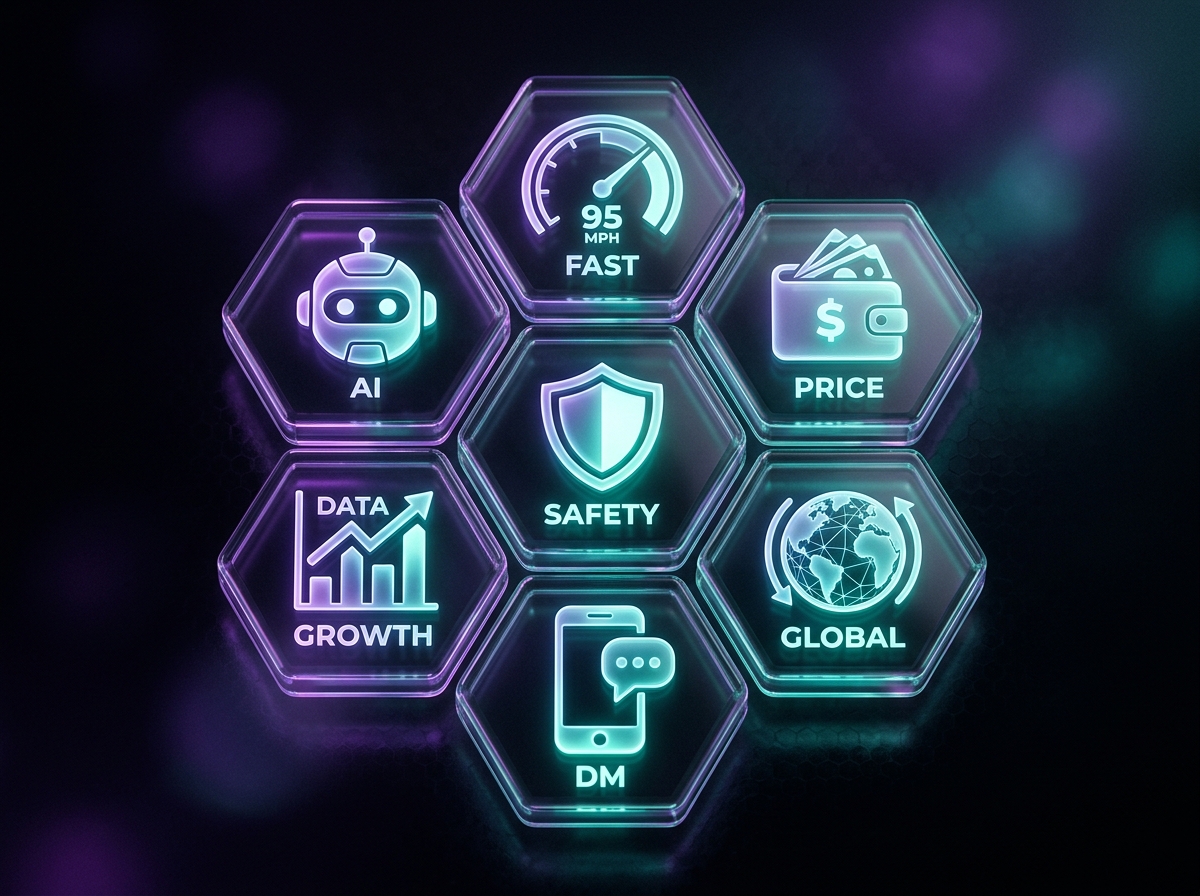
We scored every tool across seven weighted criteria that matter most to real users: Free plan generosity (20% weight), Paid plan value (20% weight), Meta API compliance and safety (15% weight), Ease of setup (10% weight), Trigger coverage (10% weight), Advanced features (15% weight), and Support quality (10% weight). Free plan generosity received the highest weighting because most creators and small D2C brands in India start on a budget and need a genuine zero-cost entry point, not a glorified trial disguised as a free tier. For paid value, we calculated the true monthly cost for a creator with 5,000 active contacts sending approximately 3,000 DMs per month — a realistic scenario for a moderately successful Indian influencer or small eCommerce brand. Tools that scored well on safety were those that explicitly documented their rate limiting behaviour; QuickDM provides transparent limits and Meta-compliant automation.
How We Verified Meta API Compliance
We verified API compliance by checking each tool's connection method. API-based tools connect through Instagram's official Graph API and Business Platform, requiring OAuth authentication with an Instagram Professional account. Non-API tools typically ask for your Instagram username and password or use browser-based scraping — both immediate red flags. We also reviewed each tool's documentation for rate limiting transparency and cross-referenced claimed DM speeds against Instagram API rate limits explained in Meta's official developer documentation. Tools that could not provide clear documentation about how they stay within Meta's 750 private replies per hour cap were marked down in our safety scoring. We also searched for user reports of account bans or action blocks associated with each tool across Reddit, Trustpilot, and social media community forums.
How We Assessed Real-World Free Plans (Not Marketing Claims)
Marketing pages are notorious for making free plans sound generous while burying critical limitations in fine print. We assessed free plans by measuring what a user could actually accomplish before hitting a paywall. For each tool, we documented the exact automation count, DM volume cap, trigger types available, follow-gating availability, email collection availability, and whether a credit card was required to sign up. QuickDM's free plan allows unlimited automation rules, 20 DMs per hour, follow-gating for up to 100 followers, and email collection for up to 100 contacts — all without a credit card. ManyChat's free plan, by contrast, limits you to 25 active contacts and 4 automations, making it functionally unusable for any creator with meaningful audience engagement. We found that only 3 of the 11 tools offer genuinely usable free plans: QuickDM, CreatorFlow (500 DMs/month), and LinkDM (1,000 DMs/month).
Our India Pricing Methodology (USD vs INR Parity)
For the India pricing analysis, we converted all USD and EUR prices to INR using exchange rates from June 2026 (approximately ₹83.3 per USD and ₹91.2 per EUR). We then applied purchasing power parity context — a $19/month subscription that feels like lunch money in San Francisco represents a meaningful monthly expense for Indian creators and small D2C brands. We also checked whether each tool offers native INR billing (only QuickDM does), UPI payment support, and India-based customer support. For tools priced only in USD, we factored in typical Indian credit card foreign transaction fees (2–3.5%) and GST complications from international vendors. The result is a true cost comparison that reflects what Indian users actually pay, not just the headline USD price converted at face value.
Quick Comparison — All 11 Tools at a Glance
Before diving into individual tool reviews, here is the master comparison table that summarises every tool across the dimensions that matter most. Use this as your reference point throughout the article.
| Feature | QuickDM | ManyChat | CreatorFlow | LinkDM | InstantDM | Inrō | SetSmart |
|---|---|---|---|---|---|---|---|
| Free Plan | ✅ Unlimited automations, 20 DMs/hr | ⚠️ 25 contacts only | ✅ 500 DMs/mo | ✅ 1,000 DMs/mo | ❌ No free plan | ✅ 100 contacts | ❌ 7-day trial only |
| Starting Paid Price | $10/mo | ₹399/mo | $14/mo | $15/mo | $19/mo | $9.99/mo | ~$13.50/mo | $99/mo |
| Pricing Model | Flat rate | Per active contact | DM volume cap | DM volume cap | Flat rate | Per active contact | Flat rate |
| DMs/Hour (Paid) | 185/hr | ~200/hr | ~34/hr equiv. | ~34/hr equiv. | 750/hr | Unlimited | Unlimited |
| Comment-to-DM | ✅ | ✅ | ✅ | ✅ | ✅ | ✅ | ✅ |
| Follow-Gating | ✅ Free (100) | ✅ Paid | ✅ Paid | ✅ Pro | ⚠️ Unverified | ✅ Paid | ✅ |
| Email Collection | ✅ Free (100) | ✅ Paid | ✅ Paid | ✅ Pro | ❌ | ✅ Paid | ✅ |
| AI Replies | ❌ Rule-based | ✅ Pro+ | ❌ | ❌ | ❌ | ✅ | ✅ GPT-powered |
| Meta Business Partner | ✅ | ✅ | ⚠️ Unverified | ⚠️ Unverified | ✅ | ⚠️ Unverified | ✅ |
| India INR Pricing | ✅ ₹399/mo | ❌ USD only | ❌ USD only | ❌ USD only | ❌ USD only | ❌ EUR only | ❌ USD only |
Best For Different Use Cases: At a Glance
If you want the fastest possible answer for your specific situation, here is the decision matrix. Solo creators and nano-influencers in India should start with QuickDM's free plan — it has no credit card requirement and genuinely supports unlimited automation rules. D2C brands running regular Reel campaigns should also choose QuickDM Pro at ₹399/month for the combination of follow-gating, email collection, and predictable flat-rate billing. Multi-channel enterprises that need Instagram, Facebook Messenger, WhatsApp, and SMS unified in one platform should consider ManyChat despite its higher cost. High-ticket coaches selling courses or consulting above $1,000 per sale may find SetSmart's AI-powered in-DM call booking worth the $99/month investment. Agencies managing multiple client accounts may prefer CreatorFlow Growth at $30/month for its 5-account support. If you are on the tightest possible global budget and do not need a free tier, InstantDM at $9.99/month offers the highest DM throughput at 750 messages per hour.
Pricing Model Overview (Per-Contact vs Per-Volume vs Flat)
Understanding pricing models is essential because the wrong choice can cost you hundreds of dollars during viral growth. Per-contact billing (ManyChat, Inrō) charges based on how many unique people have interacted with your automations in a billing period. This model punishes viral content — a single Reel that attracts 5,000 commenters becomes a $200+ bill shock. Per-volume billing (CreatorFlow, LinkDM) charges based on total DMs sent, regardless of how many unique users triggered them. This is more predictable but still scales with activity. Flat-rate billing (QuickDM, InstantDM, SetSmart) charges a fixed monthly fee regardless of volume or contact count. For creators and brands whose content occasionally goes viral, flat-rate billing provides essential cost predictability. We explain the financial impact of each model in detail in our per-contact vs per-volume pricing comparison.
Which Tools Have a Real Free Plan?
Of the 11 tools we tested, only three offer genuinely usable free plans that can drive real business results without immediate upgrade pressure. QuickDM's free plan stands apart with unlimited automation rules, 20 DMs per hour (approximately 480 DMs per day), follow-gating for up to 100 followers, and email collection for up to 100 contacts — all with no credit card and no expiration. CreatorFlow offers 500 DMs per month on its free tier with one Instagram account, which is functional but limits you to roughly 16 DMs per day. LinkDM provides 1,000 DMs per month on its free plan with access to your last 10 posts, making it the highest-volume free option after QuickDM, though it lacks follow-gating and email collection on the free tier. ManyChat's free plan with 25 contacts and 4 automations is effectively a brief trial, not a real free tier. InstantDM and SetSmart offer no free plan at all.
#1 — QuickDM (Best Free Plan + Best Value for India)
QuickDM is an official Meta Business Partner and Mumbai-based Instagram automation platform built specifically for Indian creators, D2C brands, and marketing agencies. It connects to Instagram's official Graph API to deliver comment-to-DM automation, keyword-triggered DM responses, follow-gating, and email collection — all within Instagram's safety limits. What separates QuickDM from every competitor is its genuinely free forever plan and its ₹399/month Pro pricing for India, making it the most affordable tool in this comparison by a significant margin.

What QuickDM Does
QuickDM operates as a rule-based Instagram DM automation platform, meaning it sends pre-written responses when specific trigger conditions are met. The primary trigger is comment-to-DM: when a user comments a keyword (such as "LINK," "GUIDE," or "OFFER") on your post or Reel, QuickDM automatically sends them a direct message containing your chosen response — typically a download link, discount code, or product catalogue. The platform also supports DM keyword triggers, where incoming messages containing specific words automatically receive a programmed reply. Follow-gating allows you to withhold the promised content until the user follows your account, turning every DM interaction into a follower acquisition opportunity. Email collection adds an additional layer where the DM asks the recipient for their email address in exchange for the content, building your marketing list directly from Instagram engagement. QuickDM's Mumbai-based team has built the platform around Indian creator workflows, including support for regional language DM templates in Hindi, Tamil, Telugu, Bengali, and Marathi through Unicode text support.
QuickDM Free Plan — What You Actually Get
The QuickDM Free Forever plan is the most generous free tier we found across all 11 tools. It includes: unlimited automation rules — you can create as many different trigger-response combinations as you need; 20 DMs per hour — enough for approximately 480 DMs per day or 14,400 per month; comment-to-DM triggers on posts and Reels; follow-gating for up to 100 followers; email collection for up to 100 email addresses; and no credit card required at signup. This is not a limited trial — the free plan has no expiration date. For a nano-influencer or small D2C brand just starting with Instagram automation, this free tier can drive meaningful results for weeks or months before any upgrade is needed. At 20 DMs per hour, a creator running a weekly Reel campaign with 500 commenters can handle the entire volume without paying anything.
QuickDM Pro Plan — ₹399/mo India, $10/mo Global
QuickDM Pro dramatically expands capacity while maintaining the lowest price point in the market. For India users, Pro costs ₹399 per month — roughly the price of two cups of specialty coffee. Global users pay $10 per month. Pro increases your DM sending rate to 185 DMs per hour, which is nearly 10× the free plan rate and sits comfortably at approximately 25% of Meta's official 750 private replies per hour limit, ensuring maximum safety. Pro removes all caps on follow-gating and email collection, adds story reply automation triggers, and enables QuickDM Pro — ₹399/month priority support. The value proposition is stark: ManyChat Pro starts at $29 per month and scales upward with per-contact overages, while QuickDM Pro at ₹399 (approximately $4.79) delivers comparable core functionality at roughly one-sixth the starting price. For Indian agencies managing multiple client accounts, this pricing difference compounds rapidly across client portfolios.
QuickDM vs the Competition: Where It Wins
QuickDM wins on four dimensions that matter most to its target audience. Price: At ₹399/month, it is the cheapest paid option and the only one with native INR billing. ManyChat costs 3× more at entry level and 10–20× more during viral growth. Free plan authenticity: QuickDM's free tier has no contact limits, no automation limits, and no credit card requirement — genuinely unique in this market. India-specific infrastructure: Mumbai HQ means UPI-friendly billing, India timezone support, and product decisions informed by Indian creator workflows. Flat-rate predictability: Unlike ManyChat's per-contact model, your bill never spikes because a Reel went viral. Where QuickDM intentionally does not compete is in AI-powered conversational chatbots — the platform is rule-based by design, keeping the product simple and the pricing low. For most comment-to-DM use cases, rule-based automation is actually preferable because responses are instant, predictable, and controllable.
QuickDM Limitations to Know
No tool is perfect for every use case, and QuickDM has limitations you should understand before committing. First, QuickDM does not offer AI-generated dynamic responses — it is strictly rule-based. If you need a chatbot that can hold open-ended conversations, qualify leads through natural language, or respond to unpredictable user inputs, you will need Inrō or SetSmart instead. Second, QuickDM is Instagram-focused and does not support multi-channel automation across WhatsApp, Facebook Messenger, or SMS — ManyChat is the better choice if you need unified messaging across platforms. Third, multi-account management capabilities should be verified directly with the QuickDM team if you manage numerous client accounts, as this feature set may be evolving. Finally, story reply automation and live engagement features are marked as "coming soon" — while comment-to-DM and keyword triggers are fully operational, creators heavily focused on Story-based engagement should confirm current capabilities before signing up.
#2 — ManyChat (Best for Multi-Channel Flows, Worst for Solo Creators)
ManyChat is the most established name in the Instagram automation space, having launched in 2015 and grown to serve over one million businesses worldwide. It is an official Meta Business Partner and offers the most sophisticated flow builder in the industry, supporting Instagram, Facebook Messenger, WhatsApp, and SMS within a single unified platform. However, ManyChat's 2026 pricing restructuring — reducing its free tier from 1,000 to 25 active contacts — has made it prohibitively expensive for growing creators and small businesses, particularly in India where no INR pricing is available.

What ManyChat Does Well
ManyChat's visual flow builder remains the industry gold standard. It allows you to create complex, branching automation sequences with conditional logic, delays, user input collection, and A/B testing — all through a drag-and-drop interface that requires no coding. The multi-channel capability is genuinely powerful: you can start a conversation on Instagram, continue it on WhatsApp, and follow up via SMS, all within the same automation flow. ManyChat also offers built-in AI-powered responses through its Pro plan and above, enabling basic natural language understanding for customer service scenarios. The platform integrates with over 2,000 apps via Zapier and has native eCommerce integrations for Shopify and WooCommerce. For enterprise marketing teams that need sophisticated cross-channel nurturing and have the budget to support it, ManyChat delivers capabilities that no other tool in this list matches. The analytics dashboard provides detailed funnel metrics, conversion tracking, and revenue attribution that enterprise marketers require.
ManyChat Pricing in 2026 — The Per-Contact Trap Explained
ManyChat operates on a per-active-contact billing model that becomes increasingly expensive as your audience grows. The 2026 pricing structure breaks down as follows: the Free plan allows 25 contacts and 4 automations — functionally a trial. The Pro plan starts at $14 per month for up to 500 contacts, then scales to $29/month for 2,500 contacts, $65/month for 5,000 contacts, and continues upward to custom Enterprise pricing. The critical detail is the overage rate: on the Pro plan, every active contact above your tier limit costs an additional $0.05 per month [Source: manychat.com/pricing, verified June 2026]. This means if you are on the $29/month tier (2,500 contacts) and a viral Reel brings 3,000 new engaged commenters, you immediately jump into the next pricing band. The ManyChat per-contact pricing calculator reveals that a creator with 5,000 active contacts pays approximately $144/month — nearly 15× QuickDM Pro's $10/month global price and roughly 36× QuickDM's India price.
What Happens When Your Reel Goes Viral on ManyChat
Let us walk through a realistic scenario that catches ManyChat users off-guard every month. You post a Reel that performs unexpectedly well, attracting 3,000 comments with your trigger keyword "LINK." Each commenter becomes an active contact in ManyChat. If you were on the Pro tier covering 2,500 contacts at $29/month, you now have 500 contacts above your limit. At $0.05 per contact overage, that is an additional $25 on top of your base fee, bringing your total to $54 for that month [Source: manychat.com/pricing, verified June 2026]. But it gets worse: if those 3,000 commenters continue engaging with your content in subsequent months, they remain counted as active contacts. Your bill does not return to normal after one month — it stays elevated for as long as those contacts remain "active" within ManyChat's measurement window. This is the ManyChat bill shock phenomenon that generates the majority of complaints on review platforms. QuickDM's flat-rate pricing completely eliminates this risk — your bill is ₹399 whether you send 100 DMs or 10,000.
ManyChat Free Plan Reality in 2026 (25 Contacts)
ManyChat's free tier was reduced to 25 active contacts in early 2026, down from 1,000 contacts previously. This change effectively removed ManyChat from consideration for creators who need a genuine free starting point. With 25 contacts, you can barely test a single automation flow before hitting the limit. The free tier also restricts you to just 4 automation sequences and excludes advanced features like follow-gating, email collection, and AI responses. For comparison, QuickDM's free plan offers unlimited automations, 20 DMs per hour, and caps only on follow-gating (100 followers) and email collection (100 emails) — not on contact count. If you are evaluating free plans, read our detailed best ManyChat alternative free forever comparison to understand why QuickDM has become the default choice for creators who previously started on ManyChat.
ManyChat Trustpilot Reviews — What Real Users Say
ManyChat holds a 2.4 out of 5 rating on Trustpilot based on 276 reviews [Source: trustpilot.com/review/manychat.com, verified June 2026]. The review patterns reveal consistent complaint themes: unexpected billing charges when contact counts spike, difficulty cancelling subscriptions, slow or unhelpful customer support responses, and automations breaking during Meta platform updates. Positive reviews typically praise the visual flow builder's sophistication and the multi-channel capabilities, but even satisfied users frequently note that the pricing becomes unsustainable as their business grows. It is important to note that we paraphrase these complaint themes rather than quoting individual reviews directly, as user experiences vary and individual reviews may not represent typical outcomes. The aggregate rating, however, suggests that ManyChat's customer experience does not match its product sophistication — a critical consideration for businesses that need reliable support.
#3 — LinkDM (Best Budget Option for Comment-to-DM Funnels)
LinkDM is a focused Instagram and Facebook automation tool built specifically around comment-to-DM workflows. Founded in 2021, it has gained traction among creators who want a simple, volume-based alternative to ManyChat's complexity and per-contact pricing. LinkDM supports comment triggers on posts, Reels, Stories, and ad comments — one of the broadest trigger coverages in this comparison. Its transparent DM-volume pricing model avoids the bill shock associated with per-contact billing, though at $19/month for the Pro plan, it costs approximately 4× more than QuickDM Pro for Indian users.

What LinkDM Does Best
LinkDM's core strength is trigger coverage breadth. While most tools limit comment-to-DM to regular posts and Reels, LinkDM extends this to Stories and paid ad comments — enabling automated responses when users comment on your Instagram ads. This is particularly valuable for eCommerce brands running paid acquisition campaigns who want to automatically deliver product links or discount codes to engaged ad commenters. The setup process is notably streamlined: connect your Instagram Professional account, select the posts you want to monitor (LinkDM automatically detects your last 10 posts), set your keyword trigger, and write your DM response. The entire process takes under 5 minutes for basic comment-to-DM funnels. LinkDM also offers strong analytics on DM delivery rates, open rates, and click-through rates on links shared within DMs — giving creators clear visibility into funnel performance. For creators whose primary need is high-volume comment-to-DM delivery without complex branching logic, LinkDM provides a focused solution that avoids ManyChat's feature bloat.
LinkDM Pricing — Volume-Based and Transparent
LinkDM uses a DM-volume pricing model that charges based on how many messages you send rather than how many contacts you accumulate. The Free plan includes 1,000 DMs per month, 1 Instagram account, access to your last 10 posts, and auto-reply support for posts and Reels [Source: linkdm.com/pricing, verified June 2026]. The Pro plan costs $19 per month and increases capacity to 25,000 DMs per month across up to 3 Instagram accounts, plus adds Story and ad comment triggers, follow-gating, and email collection. A Platinum tier at $99 per month expands to unlimited DMs and up to 10 accounts. For Indian users, the Pro plan costs approximately ₹1,583 per month at current exchange rates — roughly 4× QuickDM Pro's ₹399 price. While LinkDM's volume-based model is inherently fairer than ManyChat's per-contact approach, the lack of INR pricing and the higher absolute cost make it less competitive for the Indian market specifically.
LinkDM Free Plan: 1,000 DMs/Month — Is It Enough?
LinkDM's free plan offers 1,000 DMs per month — higher than CreatorFlow's 500 DMs but lower than QuickDM's effective 14,400 DMs per month (20/hour × 24 hours × 30 days) on the free tier. For a creator posting twice per week with 100–150 comments per post, 1,000 DMs per month is sufficient to handle organic engagement. However, the free tier has important limitations: it only supports 1 Instagram account, provides access to your last 10 posts only (not your full post history), and excludes Story triggers, ad comment triggers, follow-gating, and email collection — all reserved for Pro. This means you cannot use LinkDM's free plan to build your follower base through follow-gating or collect emails for your marketing list. By comparison, QuickDM's free plan includes follow-gating for up to 100 followers and email collection for up to 100 contacts, making it substantially more functional for list building from day one.
LinkDM Limitations: No AI, Linear Flows Only
LinkDM is intentionally simple, but this simplicity creates limitations for users who need more sophisticated automation. The platform does not offer AI-powered responses or natural language processing — all replies are static, pre-written messages. There is no visual flow builder or conditional branching: every trigger maps to a single response with no ability to create multi-step sequences or ask follow-up questions. If a user replies to your automated DM, LinkDM cannot process that reply and respond intelligently — the conversation ends after the first outbound message. There is no multi-channel support beyond Instagram and Facebook, and integrations with third-party tools are limited compared to ManyChat's extensive Zapier and native app ecosystem. For basic "comment LINK → receive download URL" workflows, LinkDM works well. For anything requiring conversation logic, conditional paths, or cross-platform coordination, you will need a more capable platform.
Who Should Choose LinkDM Over QuickDM?
LinkDM makes sense over QuickDM in two specific scenarios. First, if you run paid Instagram advertising campaigns and need automated responses to ad comments, LinkDM's ad comment trigger support may justify the higher price — verify whether QuickDM's current feature set includes ad comment triggers if this is critical for your workflow. Second, if you manage 2–3 Instagram accounts and need a single dashboard to monitor comment-to-DM across all of them, LinkDM Pro's 3-account support at $19/month may be more cost-effective than managing separate QuickDM subscriptions — though QuickDM vs LinkDM pricing should be calculated for your exact account count. For all other use cases — particularly solo creators, Indian D2C brands, and budget-conscious users — QuickDM's lower pricing, more generous free plan, and follow-gating capabilities make it the stronger choice.
#4 — CreatorFlow (Best DM-Cap Pricing Model for Growing Creators)
CreatorFlow is a newer Instagram automation platform that has gained attention for its workspace-based DM-cap pricing model. Rather than charging per contact or per account, CreatorFlow charges based on DM volume across workspaces — making it particularly appealing for creators who manage multiple brands or clients. The platform offers a clean, modern interface and supports comment-to-DM, keyword triggers, and basic follow-gating. CreatorFlow's free plan provides 500 DMs per month, and paid plans start at $15 per month for 5,000 DMs.

What Makes CreatorFlow Different
CreatorFlow's defining characteristic is its workspace-centric architecture. Instead of organizing automations around individual Instagram accounts, CreatorFlow groups everything into workspaces — each workspace can contain multiple Instagram accounts, shared automation templates, and unified analytics. This structure is intuitive for agencies and multi-brand creators who think in terms of projects rather than individual social accounts. The platform also emphasizes analytics more heavily than some competitors, providing detailed breakdowns of DM delivery timing, user engagement patterns, and conversion tracking from DM to external link clicks. CreatorFlow's DM-cap pricing model means you purchase a block of DMs (500 on free, 5,000 on Pro, 10,000 on Growth) and can distribute them across any number of accounts within your workspace. This creates natural economies of scale: a single creator with one account uses the same pricing structure as an agency with five accounts, making the per-account cost lower as you add more profiles.
CreatorFlow Pricing Tiers Explained
CreatorFlow offers three pricing tiers. The Free plan includes 500 DMs per workspace per month, 1 Instagram account, and basic automation features — no credit card required [Source: creatorflow.so/pricing, verified June 2026]. The Pro plan costs $15 per month ($12 per month on annual billing) and increases to 5,000 DMs per workspace, 2 Instagram accounts, and adds follow-gating and email collection. The Growth plan costs $30 per month and expands to 10,000 DMs and 5 Instagram accounts with priority support. For Indian users, Pro costs approximately ₹1,250 per month — roughly 3× QuickDM Pro's India price. While CreatorFlow's DM-cap model is inherently fairer than ManyChat's per-contact approach, the 5,000 DM monthly cap on Pro means heavy users may need to upgrade to Growth, at which point the $30/month price approaches ManyChat territory. Read our CreatorFlow pricing vs QuickDM analysis for a detailed cost comparison across different usage scenarios.
CreatorFlow Free Plan: 500 DMs/Month
CreatorFlow's free plan provides 500 DMs per month — enough for approximately 16 DMs per day. For a creator posting once per week who receives 100–125 comments per post, this covers organic engagement but leaves no headroom for viral moments. The free tier supports 1 Instagram account and includes basic comment-to-DM and keyword trigger functionality, but excludes follow-gating and email collection — both are Pro-only features. This is a meaningful limitation compared to QuickDM's free plan, which includes follow-gating for up to 100 followers and email collection for up to 100 contacts. If your primary goal is building your follower base and email list through automation, CreatorFlow's free tier will not get you started — you will need to upgrade to Pro immediately. For pure comment-to-DM link delivery without list building, CreatorFlow's 500 DM free allowance is functional but modest.
CreatorFlow's Volume Model vs ManyChat's Contact Model
The fundamental difference between CreatorFlow and ManyChat is what drives your cost. With CreatorFlow, you pay for messages sent — 5,000 DMs costs $15 regardless of whether those DMs went to 500 people or 5,000 people. With ManyChat, you pay for people reached — 5,000 active contacts costs $65 regardless of whether you sent them one message each or fifty. For creators whose audience engages repeatedly, ManyChat becomes progressively more expensive. For creators who send high volumes to smaller audiences, CreatorFlow may hit its DM cap. The CreatorFlow vs ManyChat comparison essentially comes down to your engagement pattern: if you have a large, lightly-engaged audience, CreatorFlow wins. If you have a small, highly-engaged audience that you message frequently, the comparison requires more detailed calculation. QuickDM's flat-rate model sidesteps this entire calculation — one price, unlimited automations, no caps to optimize around.
CreatorFlow Limitations
CreatorFlow's limitations center on feature depth and India accessibility. The platform does not offer AI-powered responses or sophisticated conditional logic — it is primarily a rule-based tool for straightforward comment-to-DM and keyword trigger workflows. Multi-account management requires the Growth plan at $30/month, which is competitive but not the cheapest option for agencies. There is no native INR pricing, meaning Indian users pay in USD with associated conversion costs. The platform is also newer than ManyChat and QuickDM, with a smaller user community and less extensive documentation — though this is improving rapidly. For creators who need a middle ground between ManyChat's complexity and LinkDM's simplicity, CreatorFlow occupies a useful position, but QuickDM vs CreatorFlow value analysis strongly favours QuickDM on price for the Indian market.
#5 — InstantDM (Best for Safe High-Speed Comment Automation)
InstantDM is an Instagram automation tool positioned around speed and safety. Unlike most competitors who simply send DMs as fast as the API allows, InstantDM has built a proprietary queue and flood controller that manages DM delivery during viral traffic spikes. This makes it particularly attractive to creators with highly engaged audiences who worry about hitting rate limits or triggering Instagram action blocks when a post goes viral. InstantDM is an official Meta Business Partner and claims to have never caused an account ban — a strong safety credential in an industry where account security is the primary concern.
InstantDM's Core Use Case
InstantDM is designed for one primary scenario: high-volume comment-to-DM delivery when your content goes viral. While most tools simply pass messages through the API as quickly as possible, InstantDM adds a smart queuing layer that spaces out deliveries during traffic surges to avoid triggering Instagram's rate limiting algorithms. This is particularly valuable for creators in niches where viral moments are common — meme accounts, trending topic commentators, and creators who regularly achieve 100,000+ views per Reel. The platform supports comment-to-DM triggers on posts and Reels, keyword DM triggers, and basic follow-gating. Where InstantDM differentiates is in its proactive approach to rate limiting: rather than hitting the API wall and risking blocks, it smooths out delivery to maintain steady, sustainable sending patterns that Instagram's systems interpret as normal user behaviour.
InstantDM Safety Controls — How the Queue Works
InstantDM's flood controller operates on a configurable queue system. When a post receives more comments than your configured safe delivery rate, the excess messages enter a queue rather than being sent immediately. The system then releases queued messages at a steady pace that stays within your defined safety parameters. You can configure the maximum DMs per hour, with the Legend Pro plan allowing up to 750 DMs per hour — right at Meta's official private replies limit but spread smoothly to avoid detection patterns that trigger action blocks. This is more sophisticated than QuickDM's approach, which caps at 185 DMs per hour for safety margin. For creators who trust their content to go viral regularly and need maximum throughput without manual monitoring, InstantDM's queue system provides peace of mind that simpler tools cannot match. However, QuickDM's 185/hour rate already sits well within Meta's safe zone, making InstantDM's additional complexity unnecessary for most users who do not regularly receive 750+ comment triggers per hour.
InstantDM Pricing: Legend Pro ($9.99) vs Trendsetter ($24.99)
InstantDM offers two paid tiers with no free plan. Legend Pro costs $9.99 per month and includes 750 DMs per hour, unlimited monthly DM volume, and comment-to-DM automation on posts and Reels [Source: instantdm.com/pricing, verified June 2026]. Trendsetter costs $24.99 per month and adds API access for custom integrations, priority support, and what the company describes as "truly unlimited" DM throughput — though this still operates within Meta's hard API limits. For Indian users, Legend Pro costs approximately ₹833 per month — more than double QuickDM Pro's ₹399 price. The absence of a free plan means you must pay from day one, which is a significant barrier for creators who want to test Instagram automation before committing financially. InstantDM's argument is that serious creators should be willing to invest $10/month in their growth stack — a reasonable position, but one that ignores the reality that many Indian creators and small D2C brands operate on extremely tight budgets where even $10 is a meaningful expense.
No Free Plan: Is It Worth Paying From Day One?
The absence of a free plan is InstantDM's biggest weakness relative to competitors. QuickDM, CreatorFlow, and LinkDM all allow you to start automating DMs at zero cost, build proof of concept, and validate ROI before spending money. With InstantDM, you are committing $9.99 per month before you know whether Instagram automation will work for your specific audience and content strategy. For creators who are already earning revenue from Instagram — through brand deals, affiliate marketing, or product sales — $10/month is a trivial investment. For creators still in the growth phase with no monetization, it is a barrier. InstantDM does offer a 7-day money-back guarantee, which partially mitigates the risk, but it is not the same as a free forever plan with no credit card requirement. If you are confident in your content strategy and need the highest safe throughput available, InstantDM justifies its price. If you are experimenting or operating on a minimal budget, start with QuickDM's free plan and upgrade only when you hit the 20 DMs/hour limit.
InstantDM Limitations
Beyond the lack of a free tier, InstantDM has several limitations. The platform does not offer email collection within DM flows — a significant gap for creators building marketing lists. There is no AI-powered response capability, and conditional logic or branching flows are not supported — all responses are single-message, trigger-based replies. Multi-account management capabilities are not clearly documented and should be verified with their sales team if you manage multiple Instagram profiles. There is no multi-channel support beyond Instagram, and integrations with third-party tools are limited compared to ManyChat's extensive ecosystem. For Indian users, the lack of INR pricing means paying in USD with associated conversion fees. InstantDM is a specialised tool for a specific use case — high-volume, safety-first DM delivery — rather than a comprehensive Instagram marketing platform. For most creators, QuickDM's combination of free tier, follow-gating, email collection, and lower price makes it the more versatile choice.
#6 — Inrō (Best for AI-Powered DM Conversations)
Inrō is a European Instagram automation platform that positions itself around AI-powered conversational DM management. Unlike the rule-based tools that dominate this list, Inrō uses artificial intelligence to hold dynamic conversations, qualify leads, and route enquiries — making it closer to a chatbot platform than a simple trigger-response system. The product has received strong early reviews, including a 4.9 out of 5 rating on Product Hunt based on 16 reviews [Source: producthunt.com/products/inro/reviews, verified June 2026]. However, its per-contact pricing model and EUR-denominated pricing make it less competitive for Indian users.
What the Inrō AI Agent Does
Inrō's AI agent goes beyond simple keyword matching. When a user comments on your post or sends you a DM, the AI analyses their message intent and generates a contextual response rather than pulling from a fixed template. It can ask qualifying questions ("What is your budget?" "When do you need this delivered?"), understand open-ended replies, and route qualified leads to human team members when specific conditions are met. The platform includes a lightweight CRM that tracks conversation history, user tags, and lead scoring — functionality that approaches a full customer management system rather than just DM automation. For high-ticket service businesses — luxury coaches, consulting agencies, premium B2B services — this AI qualification layer can replace the need for a human sales development representative for initial enquiry handling. However, for creators who simply want to send download links to commenters, Inrō's AI is significant overkill and adds unnecessary cost and complexity.
Inrō Pricing — Contact-Based Like ManyChat
Inrō uses per-active-contact pricing similar to ManyChat, which means costs scale with audience engagement. The Free plan includes 100 active contacts, 3 automations, and 50 AI credits per month [Source: inro.social/pricing, verified June 2026]. The Pro plan starts at approximately €12.99 per month (roughly $13.50 or ₹1,200) for 500 contacts and scales upward to €599.99 per month for 50,000 contacts. A managed service tier starts at €200 per month for businesses that want Inrō's team to build and manage their automation flows. The pricing complexity is notable: you must track both contact counts and AI credit consumption, as each AI-generated response consumes credits from your monthly pool. For Indian users, the EUR pricing creates additional friction — you pay in euros with associated conversion costs, and there is no INR pricing option. At every comparable tier, Inrō costs 3–4× more than QuickDM Pro while offering AI capabilities that most creators do not actually need.
Inrō Free Plan: 100 Active Contacts/Month
Inrō's free plan allows 100 active contacts per month — four times ManyChat's 25-contact free tier but still highly restrictive. You are limited to 3 automations and 50 AI credits, meaning you can test the AI functionality but cannot build a comprehensive automation system. Once you hit 100 contacts or 50 AI responses, you must upgrade to Pro or wait until your next billing cycle. For creators who want to test AI-powered DM responses before committing, the 100-contact allowance provides a genuine preview of the platform's capabilities. However, if your goal is simply comment-to-DM link delivery, QuickDM's free plan with unlimited automations and 20 DMs per hour is far more practical — you can serve unlimited commenters (the DM rate limit is the constraint, not contact count) without ever hitting a contact ceiling.
Inrō's Strength: CRM + AI Qualification
Where Inrō genuinely excels is at the intersection of CRM and conversational AI. The platform does not just send DMs — it builds a database of every conversation, tags users based on their responses, scores leads by engagement quality, and can trigger different follow-up sequences based on user behaviour. If a lead indicates high budget and urgent timeline, the AI can automatically schedule a call or escalate to a human salesperson. If a lead is unqualified, the AI can politely disengage without wasting human time. This level of sophistication is valuable for businesses where each qualified lead is worth hundreds or thousands of dollars — the cost of Inrō is easily justified if it replaces even a fraction of human sales effort. For creators selling $19 digital products or running affiliate campaigns, this sophistication is unnecessary and the per-contact pricing becomes punitive.
Who Is Inrō Actually For?
Inrō is designed for service businesses and high-ticket coaches who need lead qualification at scale. If you sell consulting packages above $1,000, coaching programmes, agency services, or B2B solutions where understanding client needs before a sales call matters, Inrō's AI qualification can replace expensive human SDRs. If you are a content creator, micro-influencer, D2C brand, or eCommerce operator who primarily needs to send links, codes, and catalogues via DM, Inrō is significant overkill. The AI credits system, per-contact pricing, EUR denomination, and CRM complexity all add overhead that delivers no value for simple automation workflows. For these users, QuickDM's rule-based approach at ₹399/month is the pragmatic choice — you get faster setup, predictable pricing, and all the functionality you actually need without paying for AI you will not use.
#7 — SetSmart (Best for High-Ticket Coaches Who Need AI Call Booking)
SetSmart is a premium Instagram automation platform positioned at the intersection of AI chatbots and sales automation. Unlike the tools reviewed so far, SetSmart is not primarily a comment-to-DM link delivery system — it is an AI "setter" that converses with prospects in Instagram DMs, qualifies them, and books sales calls directly within the conversation. Priced at $99 per month after a 7-day free trial, SetSmart is the most expensive tool in this comparison by a wide margin, but it targets a different customer: high-ticket coaches, consultants, and agencies where a single booked call can generate thousands of dollars in revenue.
SetSmart's Core Differentiator: In-DM Call Booking
SetSmart's signature feature is its in-DM call booking system. When a prospect expresses interest in your coaching or consulting service, the AI reads your real calendar availability through integrated scheduling and presents open slots directly within the Instagram DM conversation. The prospect selects a time, and the booking is confirmed without ever leaving Instagram — no external links, no Calendly redirects, no friction. This matters because every additional click in a booking funnel reduces conversion rates by approximately 20–30%. By keeping the entire scheduling process inside DM, SetSmart eliminates the drop-off that occurs when prospects are redirected to external booking pages. The AI can also handle rescheduling, cancellation, and reminder messages automatically. For coaches selling $2,000+ programmes, booking even one additional call per month justifies SetSmart's $99 price. For creators selling $20 templates, this feature is irrelevant.
SetSmart's GPT-Powered Setter vs Flow-Based Bots
Whereas tools like ManyChat use rule-based flow builders ("if user says X, send Y"), SetSmart deploys a GPT-powered conversational agent that can handle open-ended dialogue. The AI setter can answer questions about your programme, handle objections ("Is this too expensive?" "Do you offer payment plans?"), and naturally transition the conversation toward a booking. SetSmart's marketing claims that prospects often cannot distinguish the AI from a human setter — a bold claim that should be tested in your specific niche before relying on it entirely. The GPT integration means responses are generated dynamically rather than pulled from templates, allowing for more natural conversation flow. However, this also means less control over exact messaging compared to rule-based systems. For brands where compliance and message precision matter (regulated industries, medical coaching, financial advice), the lack of guaranteed response control may be a concern.
SetSmart Pricing: $99/Month After Free Trial
SetSmart costs $99 per month with a 7-day free trial — no free plan exists beyond the trial period [Source: setsmart.io/pricing, verified June 2026]. For Indian users, this translates to approximately ₹8,250 per month — more than 20× QuickDM Pro's price. There is no INR pricing option. SetSmart is an official Meta Business Partner, which provides the safety assurance that comes with API-based automation. The $99 price point is justified by the platform's target market: a single high-ticket sale (coaching package, agency contract, consulting engagement) typically generates $1,000–$10,000+ in revenue, making $99/month a trivial customer acquisition cost. However, for the vast majority of Indian creators, D2C brands, and small businesses, SetSmart's price places it firmly outside reasonable budget territory. This is a specialised tool for a specific economic segment, not a general-purpose Instagram automation solution.
Voice Notes in DMs — Unique Feature
SetSmart offers a distinctive capability that no other tool in this list provides: voice note sending and understanding within DM conversations. The AI can send pre-recorded voice messages to prospects (creating a remarkably personal feel) and can reportedly understand voice notes sent by users, transcribing them and responding contextually. For relationship-driven sales where personal touch matters — coaching, consulting, mentorship programmes — this voice capability creates an intimacy that text-based automation cannot replicate. Indian coaches and consultants who build trust through personal communication may find this particularly valuable given the cultural preference for voice messages on WhatsApp and Instagram in the Indian market. Whether this single feature justifies the 20× price premium over QuickDM depends entirely on your average deal size and conversion funnel.
SetSmart Limitations for India + Budget Creators
SetSmart's limitations are primarily economic and geographic. At $99/month with no INR pricing, it is inaccessible to most Indian creators and small D2C brands. The AI setter, while sophisticated, requires significant setup time to train on your specific offer, objections, and booking process — expect 2–3 hours of initial configuration versus under 10 minutes for a basic QuickDM comment-to-DM flow. The platform is overkill for simple automation use cases: if you need to send download links, discount codes, or product catalogues, SetSmart's AI complexity adds friction without delivering value. There is no meaningful free tier to test the platform before the 7-day trial expires. For the Indian market specifically, the absence of regional language support documentation and India-based customer support may create additional friction. SetSmart is a powerful tool for its niche — high-ticket sales automation — but it is not a general-purpose Instagram automation solution and should not be compared directly on price with tools serving fundamentally different use cases.
#8 — Chatfuel (Best for Facebook Messenger Bots with IG as Add-On)
Chatfuel is one of the oldest chatbot platforms, having launched in 2015 as a Facebook Messenger automation tool before expanding to Instagram. It is an official Meta Business Partner and claims to serve over 1 million businesses worldwide. However, Chatfuel's architecture remains fundamentally Messenger-first: Instagram automation feels like an add-on rather than a native priority. This makes Chatfuel a viable choice for businesses that primarily use Facebook Messenger and want Instagram as a secondary channel, but a suboptimal choice for Instagram-first creators and brands.
Chatfuel's Primary Use Case
Chatfuel excels at building complex Facebook Messenger bots for eCommerce, customer service, and marketing automation. The visual flow builder is powerful, supporting conditional logic, user attribute storage, A/B testing, and integration with Google Sheets, Zapier, Shopify, and Calendly. If your business runs Facebook ad campaigns that drive users into Messenger conversations — for product recommendations, order tracking, or lead qualification — Chatfuel provides the infrastructure to build sophisticated conversational experiences. The Instagram extension allows you to deploy some of these flows to Instagram DMs, but with reduced functionality compared to the Messenger implementation. Comment-to-DM triggers are supported, as are keyword-based DM responses, but the Instagram-specific feature set lags behind dedicated Instagram tools like QuickDM and ManyChat. For businesses where Messenger represents 70%+ of automated conversation volume and Instagram is secondary, Chatfuel's unified approach makes sense. For Instagram-first strategies, it does not.
Chatfuel Pricing and the "Free Plan" Reality
Chatfuel's pricing is notably inconsistent across sources. The company advertises a free plan with basic features, but the exact limitations and paid tier pricing vary depending on which page you check [Source: chatfuel.com/pricing, verified June 2026]. Pro plans appear to start between $15 and $23.99 per month depending on feature selection, with Business plans reaching $39 per month or higher. Some sources cite $15/month for entry-level paid access while others indicate $23.99 — this pricing ambiguity is itself a concern for budget-conscious users who need predictable costs. For Indian users, even the lowest cited price of $15/month equals approximately ₹1,250 — more than 3× QuickDM Pro's India price. There is no INR pricing. The free plan exists but is limited in automation count and excludes Instagram-specific features that require paid access. Before committing to Chatfuel, we recommend verifying the exact pricing for your required feature set directly on their live pricing page, as rates appear to change based on geography and promotional periods.
GPT-5 Built-In — How It Actually Works
Chatfuel advertises built-in GPT-5 integration for AI-powered responses across its automation flows. In practice, this means you can designate certain steps in your flow builder to generate dynamic AI responses rather than sending pre-written templates. The AI can answer product questions, handle basic customer service enquiries, and maintain conversational context across multiple message exchanges. However, the GPT integration is a paid feature not available on the free plan, and AI credit consumption adds an additional variable cost on top of your base subscription. Compared to Inrō's native AI-first architecture, Chatfuel's AI feels bolted onto a fundamentally rule-based system — functional, but not as seamlessly conversational. For businesses that need occasional AI augmentation within primarily rule-based flows, Chatfuel's approach is adequate. For those wanting fully AI-driven conversations, Inrō or SetSmart provide more sophisticated implementations.
Chatfuel Limitations for Instagram-First Users
For creators and brands whose primary platform is Instagram, Chatfuel has meaningful limitations. The Instagram automation feature set is a subset of the Messenger capabilities — certain trigger types, analytics metrics, and integration options that work flawlessly on Messenger are reduced or unavailable on Instagram. Setup time is significantly longer than dedicated Instagram tools: building a basic comment-to-DM flow in Chatfuel requires navigating a complex flow builder designed for multi-turn Messenger conversations, whereas QuickDM achieves the same result in under 10 minutes with a streamlined Instagram-specific interface. The pricing ambiguity and lack of INR pricing create additional friction for Indian users. Customer support quality receives mixed reviews, with some users reporting slow response times for Instagram-specific issues that suggest Messenger remains the platform's technical priority. If Instagram is your primary or only platform, choose a dedicated Instagram tool rather than accepting Chatfuel's Messenger-first compromise.
#9 — Kicksta (Follower Growth Only — Not DM Automation)
Kicksta is included in this comparison for completeness because it appears in numerous "Instagram automation tool" roundups across the web. However, it is important to understand from the outset that Kicksta is not a DM automation tool — it is a follower growth service that uses automated engagement (liking and following target accounts) to increase your follower count. It operates in a fundamentally different category from the comment-to-DM and keyword trigger tools that make up the rest of this list. If you are looking for Instagram DM automation to deliver links, collect emails, or send discount codes, Kicksta does not do any of those things.
What Kicksta Actually Does
Kicksta's service works by automating likes and follows on Instagram accounts that match your target criteria — typically defined by hashtags, locations, competitor followers, or influencer audience overlap. When Kicksta likes a photo from a target account, that account's owner receives a notification, ideally clicks through to your profile, and follows you if your content appeals to them. Kicksta does not send direct messages, does not respond to comments, and does not interact with your existing audience in any way. It is purely an audience acquisition tool focused on the top of the Instagram growth funnel. The company claims to deliver "organic" growth through "real" followers, though the distinction between automated engagement and genuinely organic discovery is debatable. Kicksta offers targeting by hashtag, location, gender, and account type (business or creator), allowing you to narrow the pool of accounts that receive your automated interactions.
Why Follower Growth Tools Miss the Revenue Opportunity
Follower growth tools like Kicksta address only one stage of the Instagram marketing funnel: audience acquisition. They do nothing to monetise that audience. A creator with 100,000 followers and no DM automation earns zero revenue from their audience unless they manually respond to every enquiry, comment, and DM. By contrast, a creator with 10,000 followers and robust DM automation can generate consistent revenue through affiliate link delivery, product catalogue distribution, discount code redemption, and email list building. The tools reviewed earlier in this article — QuickDM, ManyChat, LinkDM, CreatorFlow — address the conversion and monetisation stages of the funnel that Kicksta ignores. For businesses that care about revenue rather than vanity metrics, DM automation delivers substantially more return on investment than follower growth services. This is particularly true in the Indian market, where engaged micro-audiences often convert better than large, passively-grown followings.
Kicksta Pricing vs Value for Money
Kicksta's pricing starts at approximately $69 per month for the standard plan, with a premium tier at $129 per month and a platinum tier at $219 per month [Source: kicksta.co/pricing, verified June 2026]. For Indian users, the entry-level plan costs approximately ₹5,750 per month — nearly 14× QuickDM Pro's price and with no INR billing option. When evaluating value for money, consider what each tool actually delivers: Kicksta promises follower growth but cannot guarantee engagement quality, purchase intent, or revenue generation. DM automation tools like QuickDM at ₹399/month directly facilitate link clicks, email signups, and sales — outcomes with clear monetary value. Additionally, Kicksta does not hold official Meta Business Partner status, and automated liking/following tools operate in a regulatory grey area under Instagram's Terms of Service. While Kicksta claims its methods are safe, any form of automated engagement carries inherent account risk that API-based DM automation tools do not. For most creators and brands, investing in content quality and DM automation delivers more sustainable results than automated follower growth.
#10 — Inflact (DM Mass Outreach — High Ban Risk, Avoid)
Inflact is included in this article not as a recommendation but as a cautionary example. It represents a category of tools that promise mass DM outreach, bulk messaging, and automated engagement through methods that violate Instagram's Terms of Service. Understanding why these tools are dangerous — and how to identify them — is essential for protecting your Instagram account and the business you have built on it. If you are considering Inflact or any similar mass-DM tool, read this section carefully before proceeding.
What Inflact Does
Inflact markets itself as an "Instagram growth toolkit" offering bulk DM sending, mass story viewing, automated liking and commenting, and follower acquisition. The platform allows you to send templated direct messages to lists of Instagram users — often hundreds or thousands of recipients — without those users having first engaged with your content. This is fundamentally different from the comment-to-DM automation reviewed throughout this article, where users must voluntarily comment on your post before receiving a message. Inflact's mass outreach model sends unsolicited messages to users who have never interacted with your account, typically using scraped user lists defined by hashtag, location, or competitor follower overlap. The platform operates outside Instagram's official API, requiring your Instagram username and password to function — a major security red flag.
Why Mass Cold DM Outreach Violates Instagram's Rules
Instagram's Terms of Service and Community Guidelines explicitly prohibit the use of automated tools to send unsolicited messages, scrape user data, and artificially inflate engagement. Mass cold DM outreach violates multiple policies simultaneously: it is unsolicited (recipients have not consented), it is automated (not sent manually by a human), and it typically requires credential sharing (giving your password to a third-party service). Instagram's detection systems have become increasingly sophisticated at identifying these patterns, and accounts using mass-DM tools face escalating penalties: initial temporary action blocks (24–48 hours), extended blocks (1–2 weeks), and ultimately permanent account suspension with no recovery option. The risk is not theoretical — thousands of accounts are banned monthly for automation violations. Unlike API-based tools that operate within Meta's official framework with defined safety limits, mass-DM tools like Inflact have no safety mechanisms because they are not using official channels.
Inflact vs API-Based Tools: The Safety Difference
The critical distinction between Inflact and the tools ranked #1 through #8 in this article is the connection method. API-based tools like QuickDM, ManyChat, and LinkDM connect through Instagram's official Graph API using OAuth authentication — the same secure connection method used by Adobe, Canva, and other legitimate Instagram integrations. Your password is never shared, all activity is logged and auditable, and the tools operate within rate limits defined by Meta. Inflact and similar mass-DM tools require your Instagram login credentials, effectively giving a third-party service full control of your account. They operate by simulating human behaviour through browser automation or mobile device emulation — techniques that Instagram's security systems are specifically designed to detect and penalise. There is no scenario in which mass cold DM outreach is worth the risk of permanent account loss. If you have built any audience, brand recognition, or revenue stream on Instagram, protecting that asset means avoiding Inflact and all similar non-API tools entirely.
#11 — Hootsuite / Later (Scheduling Tools, Not DM Automation)
Hootsuite and Later are the final entries in our comparison, included because many creators searching for "Instagram automation" are actually looking for content scheduling and publishing tools rather than DM automation. Understanding what these tools do — and more importantly, what they do not do — will save you from signing up for a platform that does not meet your actual needs. Hootsuite and Later are social media management platforms focused on content scheduling, analytics, and team collaboration. They are not DM automation tools in the sense that QuickDM, ManyChat, and LinkDM are.
Why Scheduling Tools Are in This List
Search behaviour data reveals that a significant percentage of users searching for "Instagram automation tools" are actually looking for ways to automate their content publishing process — scheduling posts in advance, managing multiple accounts from one dashboard, and tracking performance analytics. These users do not need comment-to-DM triggers or keyword responses; they need a content calendar and publishing queue. Hootsuite and Later dominate this category and deserve mention to prevent confusion. If your goal is to automate your Instagram DM marketing — sending links to commenters, collecting emails, delivering discount codes — these tools will not help you. If your goal is to schedule Reels, carousels, and Stories in advance while monitoring analytics, these are the category leaders. Clarifying this distinction upfront prevents wasted time and subscription fees.
Hootsuite DM Automation Features — What's Actually There
Hootsuite offers minimal DM automation functionality. Through its Instagram Business integration, you can view and respond to DMs from within the Hootsuite dashboard — useful for team-based customer service where multiple team members need inbox access. However, Hootsuite does not support automated DM responses, comment-to-DM triggers, follow-gating, or keyword-based automation. You cannot set up a rule that automatically sends a download link when someone comments "GUIDE" on your Reel — that functionality simply does not exist. Hootsuite's strength is in content scheduling (supporting Instagram, Facebook, Twitter, LinkedIn, TikTok, and Pinterest), social listening, and analytics reporting. For DM automation specifically, Hootsuite is not a viable solution and should not be considered alongside dedicated automation tools. Pricing starts at approximately $99/month for the Professional plan [Source: hootsuite.com/pricing, verified June 2026], making it one of the most expensive options in this article for a feature set that does not include DM automation.
When a Scheduling Tool Is the Right Choice
A scheduling tool like Hootsuite or Later is the right choice when your primary need is content management, not conversation automation. If you publish multiple posts per week across several platforms, need approval workflows for a team, want detailed analytics on content performance, or manage social media for multiple clients, a scheduler is essential. Many businesses use both a scheduling tool (for content) and a DM automation tool (for conversations) in combination — they serve different functions in your Instagram marketing stack. If you are a solo creator who posts 2–3 times per week and your primary goal is monetising engagement through DM automation, skip the scheduler and invest in QuickDM instead. If you are a marketing agency managing 10+ client accounts with daily publishing requirements, Hootsuite or Later becomes necessary infrastructure, and you should add a dedicated DM automation tool alongside it for the conversation layer.
The Meta API Rate Limits Every Automation User Must Know
Understanding Meta's official API rate limits is the single most important knowledge asset for anyone using Instagram automation. These limits are not suggestions — they are hard technical boundaries enforced by Instagram's servers. Tools that claim to bypass or ignore these limits are either misinformed or dishonest, and using them puts your account at risk. This section breaks down the exact rate limits from Meta's official developer documentation and explains what they mean for your automation strategy.
| API Endpoint | Rate Limit | What It Means for You |
|---|---|---|
| Private Replies API (comment replies) | 750 calls/hour per account | Maximum 750 comment-to-DM replies per hour |
| Send API (text, links, reactions) | 100 calls/second per account | Maximum 360,000 text DMs per hour theoretically |
| Send API (audio, video) | 10 calls/second per account | Media messages are capped 10× lower than text |
| Conversations API | 2 calls/second per account | Reading conversation history is heavily throttled |
| Per-thread limits | Additional hidden caps | Even within global limits, individual threads have restrictions |
Source data: Meta for Developers — Graph API Rate Limiting documentation. developers.facebook.com/docs/graph-api/overview/rate-limiting, verified June 2026.
The Official Instagram Messaging Rate Limits (Sourced from Meta Developer Docs)
Meta publishes its rate limits in the official Graph API documentation, and all API-based automation tools must operate within these boundaries. The Private Replies API — which handles comment-to-DM automation when users comment on your posts and Reels — allows up to 750 private replies per hour per Instagram Professional account [Source: developers.facebook.com/docs/graph-api/overview/rate-limiting, verified June 2026]. This is the limit that matters most for creators using comment-to-DM triggers. The Send API for text messages, links, reactions, and stickers allows 100 calls per second per account — a theoretical maximum of 360,000 messages per hour that no tool approaches because the Private Replies API is the bottleneck for comment-based automation. Audio and video messages have a separate, lower limit of 10 calls per second. The Conversations API, used for reading message history and thread metadata, is throttled to 2 calls per second — meaning tools cannot constantly poll your inbox for new messages at high frequency. Beyond these global limits, Meta applies additional per-thread rate limiting that is not publicly documented but is understood to prevent spamming individual users with excessive messages.
What "Unlimited DMs" Claims Actually Mean
When a tool claims "unlimited DMs," one of three things is true: they are ignoring Meta's API limits and risking your account; they are using non-API methods that violate Instagram's Terms of Service; or they are making a marketing claim that sounds impressive but has no technical basis. The hard reality is that no tool can send more than 750 comment-to-DM replies per hour through official channels. Any tool claiming unlimited DMs either operates outside the official API (like Inflact and similar scrapers) or defines "unlimited" so narrowly that the claim is meaningless — for example, "unlimited" within the constraints of the API rate limits that apply to everyone. When evaluating tools, look for specific, documented rate limits rather than vague "unlimited" promises. Tools that transparently state their DM per hour caps — like QuickDM's documented 185/hour on Pro — demonstrate accountability and technical honesty that "unlimited" claims lack.
How QuickDM Stays Within Safe Limits at All Times
QuickDM's rate limiting strategy prioritises account safety over maximum throughput. The free plan caps DM delivery at 20 per hour — approximately 2.7% of Meta's 750/hour private replies limit. The Pro plan increases this to 185 DMs per hour — roughly 25% of the official cap. This conservative approach provides multiple safety buffers: first, it accommodates Meta's per-thread limits that operate below the global hourly cap; second, it leaves headroom for other API calls your account might be making simultaneously; third, it prevents the detection patterns that Instagram's anti-spam systems flag as suspicious. At 185 DMs per hour, QuickDM Pro can deliver 4,440 DMs per day or approximately 133,000 per month — far more than any realistic organic comment volume for all but the largest celebrity accounts. By staying well below the API ceiling, QuickDM ensures that even if Meta adjusts rate limits downward in future updates, your automation continues operating without interruption.
The Viral Reel Scenario — What Happens to Your Account
Consider what happens when your Reel unexpectedly reaches 1 million views and generates 5,000 comment triggers in two hours. If you are using QuickDM Pro at 185 DMs per hour, the system processes 370 DMs in the first two hours and queues the remaining 4,630 messages for gradual delivery over the next 25 hours. Your followers receive their promised content slightly delayed, but your account stays safe. If you were using a tool that attempted to send all 5,000 DMs immediately, you would hit Meta's 750/hour limit within the first hour, trigger Instagram's rate limiting response, and potentially receive an action block that suspends your DM capability for 24–48 hours. Worse, if the tool uses non-API methods to "bypass" limits, you risk a permanent account ban at the moment of your greatest visibility. The viral Reel scenario is exactly why rate limiting discipline matters — your biggest content moment should grow your business, not destroy your account.
Safe DM Automation Checklist
Before enabling any Instagram automation tool, verify every item on this checklist. First, confirm the tool connects through official Meta API OAuth — you should authenticate through Instagram's official login portal, never share your password. Second, check that the tool is a verified Meta Business Partner — this indicates official recognition and API access legitimacy. Third, review the tool's documented rate limits — they should specify exact DMs per hour, not vague "unlimited" claims. Fourth, ensure the tool has a queue or buffer system for handling viral spikes without attempting to exceed API caps. Fifth, check user reports for account bans or action blocks associated with the tool — search Reddit, Trustpilot, and social media communities. Sixth, start with conservative automation settings and scale up gradually — how to warm up your Instagram account for automation matters for long-term safety. Seventh, never use tools that promise to bypass rate limits or send "unlimited" messages — these violate Instagram's Terms of Service and risk permanent account loss.
Pricing Compared — The True Cost of Each Tool
Pricing pages tell only part of the story. To understand what you will actually pay, you need to model your costs against realistic usage scenarios — including the viral moments that turn predictable subscriptions into budget-breaking surprises. This section breaks down every pricing model, runs cost scenarios for different creator profiles, and reveals the hidden pricing traps that marketing pages never mention.
Per-Contact vs Per-Volume vs Flat Rate — Which Model Wins for You
The three pricing models in Instagram automation create fundamentally different cost dynamics as your account grows. Per-contact billing charges based on how many unique people interact with your automations each month. This model is used by ManyChat and Inrō. It is simple to understand but brutally expensive during viral growth because every new commenter becomes a billable contact. Per-volume billing charges based on total messages sent regardless of recipient count. CreatorFlow and LinkDM use this model. It is more predictable than per-contact but still scales with activity — heavy months cost more than light months. Flat-rate billing charges a fixed monthly fee regardless of usage. QuickDM, InstantDM, and SetSmart use this model. It provides absolute cost predictability, which is why it is the preferred model for businesses that need to budget consistently. For creators whose content occasionally goes viral, flat-rate billing is the only model that prevents bill shock. For creators with steady, predictable engagement, per-volume billing can be cost-effective if the per-message rate is low. Per-contact billing should be avoided unless you have a small, highly-engaged audience that does not grow rapidly.
The Viral Growth Penalty: Real Cost Scenarios

Let us model a realistic scenario: you post a giveaway Reel that attracts 3,000 comment triggers in one day. On ManyChat Pro ($29/month base, 2,500 contacts included), those 3,000 commenters all become active contacts. You are 500 contacts over your tier limit. At $0.05 per contact overage [Source: manychat.com/pricing, verified June 2026], that is an additional $25 for that month, bringing your total to $54. But here is the trap: those contacts remain active in subsequent months. If 2,000 of them continue engaging, you stay above your 2,500-contact tier indefinitely, meaning your "one viral Reel" permanently increases your monthly cost from $29 to $54 or higher. On QuickDM Pro (flat ₹399/month), the cost for the same 3,000 commenters is zero extra — your bill stays ₹399 regardless of volume. On CreatorFlow Pro ($15/month, 5,000 DMs), 3,000 DMs in one day uses 60% of your monthly cap, leaving little room for the rest of the month. On LinkDM Pro ($19/month, 25,000 DMs), the 3,000 DMs consume only 12% of your cap — comfortable but at 4× QuickDM's India price. The viral growth penalty is the single most underappreciated cost factor in Instagram automation pricing.
India Pricing Reality: USD vs INR Tools
For Indian creators and businesses, the currency of billing is not a minor detail — it is often the deciding factor. Here is the true cost comparison for Indian users as of June 2026, converted at ₹83.3 per USD and ₹91.2 per EUR. QuickDM Pro costs ₹399/month — the only tool with native INR pricing. InstantDM Legend Pro costs $9.99, which equals approximately ₹833/month — more than double QuickDM. ManyChat Pro starts at $14 (approximately ₹1,170/month) before any contact overages, with realistic costs for a 5,000-contact creator reaching $65 (approximately ₹5,415/month). CreatorFlow Pro at $15 equals approximately ₹1,250/month. LinkDM Pro at $19 equals approximately ₹1,583/month. Inrō Pro at €12.99 equals approximately ₹1,185/month. SetSmart at $99 equals approximately ₹8,250/month. Beyond the headline prices, USD-denominated tools create additional costs: foreign transaction fees on Indian credit cards (typically 2–3.5%), GST compliance complexity when purchasing from foreign vendors, and currency fluctuation risk as the INR moves against the USD. QuickDM's native INR billing eliminates all of these friction points — you pay exactly ₹399 through UPI or local payment methods, with no conversion surprises.
Free Plan Comparison — Which Free Plans Are Actually Usable?
Marketing departments know that "free plan" is a powerful acquisition hook, which is why so many tools offer technically free tiers that are functionally unusable. Here is the honest assessment. QuickDM's free plan is genuinely usable: unlimited automations, 20 DMs/hour, follow-gating for 100 followers, email collection for 100 contacts, no credit card required. A creator can run a complete Instagram DM marketing strategy on this plan for weeks or months before upgrading. CreatorFlow's free plan (500 DMs/month, 1 account) is modestly usable for creators posting once per week with low engagement, but the 500 DM cap means one moderately viral post forces an immediate upgrade. LinkDM's free plan (1,000 DMs/month, 1 account) offers decent volume but excludes follow-gating and email collection — you can deliver links but cannot build your follower base or email list. ManyChat's free plan (25 contacts, 4 automations) is essentially a brief trial, not a real free tier. InstantDM and SetSmart offer no free plan at all. If you need a free Instagram DM automation tool that can drive real business results from day one without immediate upgrade pressure, QuickDM is the only option that meets that standard.
Annual vs Monthly Billing — Where to Save
Most tools offer discounts for annual billing, typically 15–20% off the monthly price. CreatorFlow offers its most explicit annual discount: $12/month when paid annually versus $15/month monthly — a 20% saving [Source: creatorflow.so/pricing, verified June 2026]. ManyChat and LinkDM also offer annual billing discounts, though the exact percentages vary by tier and promotional period. QuickDM's annual pricing should be verified on their live pricing page, as early-stage tools often run promotional annual rates to reward long-term commitment. When evaluating annual billing, consider the lock-in risk: if you pay for a year upfront and the tool does not meet your needs after two months, you cannot recover the remaining subscription cost. For new users, we recommend starting on monthly billing for the first 2–3 months to validate the tool fits your workflow, then switching to annual once you are confident in long-term usage. The exception is QuickDM's free plan, which has no time limit — you can validate the platform indefinitely before ever entering payment information.
India-Specific Section — Best Instagram Automation Tool for Indian Creators & D2C Brands
The Indian Instagram ecosystem is unique. With over 350 million Instagram users in India, the market represents one of the largest and fastest-growing creator economies in the world. Indian creators face distinct challenges: USD-denominated pricing that becomes prohibitively expensive after currency conversion, payment friction with international credit cards, support teams operating in incompatible time zones, and product features designed for Western markets that do not account for Indian consumer behaviour. This section explains why QuickDM is built for India and how Indian creators and D2C brands can leverage DM automation for growth.
[CTA: Get QuickDM Pro for ₹399/month — built in Mumbai for Indian creators → https://quickdm.app/pricing]Why Global Tools Are Overpriced for India
Purchasing power parity is the economic concept that explains why $19 per month is a radically different expense in San Francisco versus Mumbai. In the United States, $19 represents approximately 1.3 hours of work at federal minimum wage — it is lunch money. For an Indian creator or small D2C brand, the equivalent burden is far greater. When you add foreign transaction fees (2–3.5% on most Indian credit cards for USD purchases), GST complexity from importing digital services, and the mental overhead of tracking USD-INR exchange rate fluctuations, the true cost of a "$19" tool approaches ₹1,600–1,700 per month in practice. Here is the effective monthly cost for Indian users across all tools: QuickDM at ₹399 (native INR, no conversion), InstantDM at approximately ₹833, ManyChat at approximately ₹1,170 (before overages), CreatorFlow at approximately ₹1,250, LinkDM at approximately ₹1,583, Inrō at approximately ₹1,185 (EUR conversion), and SetSmart at approximately ₹8,250. For a creator earning ₹30,000 per month from brand deals, ManyChat at ₹1,170+ represents nearly 4% of gross income just for DM automation — a significant expense. QuickDM at ₹399 represents just 1.3% of the same income. The best Instagram automation tools for small businesses in India must account for this economic reality.
QuickDM ₹399/mo — The Only INR-Native Tool in This List
QuickDM is the only tool among our 11 reviewed platforms that offers native INR pricing. At ₹399 per month for Pro, it is not merely cheaper after conversion — it is priced specifically for the Indian market. This matters beyond the numerical savings. Native INR billing means you pay through UPI, net banking, or domestic cards without foreign transaction fees. It means GST compliance is handled within the Indian taxation framework rather than creating cross-border service import complexity. It means your billing support team understands Indian payment issues — failed UPI transactions, NEFT processing delays, Razorpay-specific quirks — because they are an Indian team based in Mumbai. It means product development prioritises features that Indian creators actually need, such as Hinglish Instagram DM automation support and D2C brand Instagram DM automation India workflows. No competitor can replicate this because none are built in India for India. QuickDM Pro — ₹399/month is not a discount — it is market-appropriate pricing for the world's most price-sensitive large digital market.
Indian D2C Brand Use Cases
Indian D2C brands operate in a uniquely trust-dependent environment where Instagram serves as both discovery channel and customer service platform. Here are four specific use cases where QuickDM drives measurable results. First, an ethnic wear brand launching a new collection posts a Reel showcasing the designs and captions it "Comment SHOP to get the catalogue link." QuickDM automates catalogue delivery to 200 commenters in the first hour, collecting 80 emails via the email-gate feature. Total cost: ₹0 on the free plan. Second, an Ayurvedic skincare brand sets up a follow-gate: "Follow us and comment OFFER for your 20% welcome discount." Every new follower receives the discount code automatically, building both follower count and first-purchase conversion. Third, a food and snack brand posts a Reel during a flash sale with "Comment MENU to get our full menu + delivery link." QuickDM handles 300 DM deliveries during the 2-hour flash sale window without manual intervention. Fourth, a fitness supplements brand sets up keyword triggers — "pricing," "bulk order," "gym deal" — to automatically route enquiries to their WhatsApp Business number, qualifying leads before human sales teams engage. These Instagram DM automation for Indian D2C brands workflows are all supported on QuickDM's free or Pro plans.
Indian Creator & Influencer Use Cases
India's creator economy spans fashion, finance, fitness, food, and regional language content — each with distinct automation needs. A fashion micro-influencer with 50,000 followers runs an affiliate link campaign: "Comment LINK to get my styling picks." QuickDM's follow-gate ensures only followers receive the link, protecting commission attribution and growing follower count simultaneously. The entire setup takes under 10 minutes on the free plan. A finance and business content creator uses keyword DM triggers — "webinar" and "register" — to auto-reply with registration links for free educational webinars, collecting 100 emails on the free plan before ever upgrading. A regional language creator producing content in Hindi or Tamil can use QuickDM's Unicode DM template support to send automated responses in their audience's preferred language. Instagram's messaging infrastructure natively handles Hindi, Tamil, Telugu, Bengali, Marathi, and other Indian languages, meaning DM automation in regional languages is fully functional. This Instagram marketing for Indian creators capability is a unique SEO and market positioning angle that no competitor article addresses explicitly.
Regional Language DM Automation — What's Possible
India's linguistic diversity is a defining characteristic of its digital market. While most automation tools default to English, Instagram's messaging API fully supports Unicode characters, enabling DM automation in Hindi, Tamil, Telugu, Bengali, Marathi, Gujarati, Kannada, Malayalam, and other Indian languages. QuickDM's template system accepts any Unicode text, meaning you can write your automated responses in the language your audience speaks. For creators building audiences in specific Indian states, this is not a nice-to-have — it is essential. A Tamil cooking channel that automates recipe delivery via DM should send those recipes in Tamil, not English. A Hindi fitness coach should deliver workout plans in Hindi. A Bengali fashion influencer should share styling tips in Bengali. The technical capability exists; the limitation is whether your automation tool makes regional language input easy. QuickDM's Mumbai-based team understands this requirement and has built template input to support seamless multilingual automation. When evaluating tools, verify that their DM template editor accepts Unicode text without character corruption — some older platforms have encoding issues that break non-Latin scripts.
How to Choose the Right Instagram Automation Tool for Your Situation

The "best" tool depends entirely on who you are, what you sell, how large your audience is, and what budget you can allocate. This section provides specific decision paths for the five most common user profiles we encounter. Match your situation to the profile below and follow the recommended evaluation criteria.
Decision Path: Solo Creator or Nano-Influencer
If you are a solo creator or nano-influencer (under 100,000 followers) monetising through brand deals, affiliate links, or digital products, your priorities are cost minimisation, ease of setup, and free plan generosity. You likely do not have a dedicated marketing budget, so any subscription must pay for itself quickly. Start with QuickDM's free plan — it offers unlimited automations, 20 DMs per hour, follow-gating for 100 followers, and email collection for 100 contacts at zero cost. This is sufficient for most nano-influencers posting 2–3 times per week. Upgrade to QuickDM Pro at ₹399/month only when you consistently hit the 20 DMs/hour limit or need the expanded follow-gating and email collection limits. Avoid ManyChat entirely — its per-contact billing will punish you as your audience grows, and its feature complexity is unnecessary for simple link-delivery workflows. Avoid SetSmart — you do not need AI call booking for ₹8,250/month when your average transaction is under ₹500. If you are global (not India-based) and need a free plan with higher volume than QuickDM's 20/hour, LinkDM's 1,000 DMs/month free tier is your alternative — though you sacrifice follow-gating and email collection.
Decision Path: D2C Brand or eCommerce (India)
Indian D2C brands — whether selling ethnic wear, skincare, food products, or fitness supplements — need automation that drives direct revenue: product catalogue delivery, discount code distribution, order enquiry handling, and email list building. Your choice should be QuickDM Pro at ₹399/month. The flat-rate pricing means your automation cost stays constant even during festival season sales (Diwali, Eid, Christmas) when comment volumes spike 5–10×. The follow-gate feature turns every DM interaction into a follower acquisition event, building your owned audience for retargeting. Email collection feeds your WhatsApp and email marketing funnels, creating multi-channel customer relationships. The native INR pricing eliminates currency conversion overhead on tight D2C margins. For brands running paid Instagram ads alongside organic content, verify whether QuickDM's current feature set includes ad comment triggers — if this is critical and unavailable, LinkDM Pro at $19/month may be necessary for the ad automation layer while keeping organic automation on QuickDM. Read our Instagram DM automation for eCommerce guide for detailed workflow templates.
Decision Path: Digital Coach or Course Creator
Digital coaches and course creators fall into two subcategories that require different tools. If you sell courses under ₹5,000 ($60) or run group coaching programmes, your needs are similar to D2C brands: deliver lead magnets, collect emails, and send registration links. QuickDM Pro at ₹399/month handles all of this with capacity to spare. Set up keyword triggers for "webinar," "guide," and "course" to auto-deliver your funnel entry points. If you sell high-ticket coaching above ₹50,000 ($600) per engagement — one-on-one business coaching, executive mentoring, premium consulting — you need lead qualification before sales calls. In this case, evaluate SetSmart at $99/month for its AI-powered in-DM call booking and lead qualification. The price is substantial, but if it books even one additional high-ticket client per month, the ROI is immediate. As a middle ground, you can start with QuickDM for basic lead magnet delivery and manually qualify leads through your existing sales process, upgrading to AI qualification only when volume justifies the cost. Read our Instagram DM automation for coaches guide for setup walkthroughs.
Decision Path: Agency Managing Multiple Accounts
Marketing agencies managing Instagram automation for multiple client accounts have unique requirements: multi-account support, white-labelling potential, team collaboration features, and cost efficiency across a client portfolio. CreatorFlow Growth at $30/month supports up to 5 Instagram accounts per workspace, making it a cost-effective choice at $6 per account. LinkDM Pro at $19/month supports 3 accounts ($6.33 per account). ManyChat scales to unlimited accounts on higher tiers but at substantially higher cost. For agencies serving Indian clients, QuickDM's ₹399/month per account becomes compelling when clients pay in INR — no currency conversion complexity, no explaining USD bills to clients who do not hold foreign currency cards. The 2026 agency guide to automating Instagram covers white-label considerations, client onboarding workflows, and managing multiple Instagram accounts with automation at scale. If you are building an agency automation practice, start with 2–3 clients on QuickDM Pro, document your workflows, and scale from there.
Decision Path: "I Just Want the Cheapest Possible Option"
If your sole criterion is minimising cost while getting functional Instagram DM automation, the answer is unambiguous: QuickDM's free plan. No other tool offers unlimited automation rules, 20 DMs per hour, follow-gating, email collection, and no credit card requirement at zero cost. ManyChat's free plan (25 contacts, 4 automations) is functionally unusable. CreatorFlow's free plan (500 DMs/month) is usable but excludes follow-gating and email collection. LinkDM's free plan (1,000 DMs/month) offers volume but no list-building features. InstantDM and SetSmart have no free plans. For the cheapest paid option, QuickDM Pro at ₹399/month (India) or $10/month (global) is the lowest price point among all reviewed tools. InstantDM at $9.99/month is technically $0.01 cheaper globally but costs ₹833 for Indian users — more than double QuickDM's India price. When evaluated on true cost including currency conversion, feature set, and free plan availability, QuickDM is the cheapest Instagram automation tool in 2026 by a significant margin across all major markets.
Common Mistakes to Avoid With Instagram Automation
Even the best tool produces poor results when used incorrectly. These five mistakes are responsible for the majority of account issues, poor conversion rates, and abandoned automation projects we observe in the Instagram creator community. Avoiding them will save you time, money, and potentially your account.
Mistake #1 — Using Non-API Tools (Scrapers, Password-Based Bots)
The most dangerous mistake in Instagram automation is using tools that require your Instagram password or operate through browser scraping. These tools — including Inflact and similar mass-DM services — violate Instagram's Terms of Service on multiple levels. When you provide your password to a third-party service, you lose control of your account security. These tools operate by simulating human behaviour through automated browser actions or mobile device emulation, techniques that Instagram's security systems are explicitly designed to detect. The consequences escalate rapidly: initial warnings, temporary action blocks that freeze your DM capability for 24–48 hours, extended blocks lasting weeks, and ultimately permanent account suspension with no appeal pathway. If you have built any audience — 1,000 followers or 1 million — this risk is never worth taking. Only use tools that connect through Instagram's official Graph API with OAuth authentication, where you log in through Instagram's own portal and grant specific, revocable permissions. All tools ranked #1 through #8 in this article use official API connections. Tools ranked #9 through #11 either do not do DM automation (Kicksta, Hootsuite) or should be avoided entirely (Inflact).
Mistake #2 — Enabling Automations Without a Warm-Up Period
New Instagram accounts or accounts that have never used automation should not enable maximum-rate DM sending on day one. Instagram's systems monitor account behaviour patterns, and a sudden spike in automated activity from a previously inactive account triggers suspicion. The correct approach is a gradual warm-up: start with low-volume automations (5–10 DMs per hour) for the first week, monitor for any warnings or action blocks, then gradually increase to your tool's normal operating rate. This warm-up period allows Instagram's algorithms to recognise your automation as normal account behaviour rather than a sudden anomaly. Accounts with longer histories (12+ months) and consistent organic activity can typically warm up faster than brand new accounts. If you are migrating from one automation tool to another, maintain the same DM volume patterns during the transition — a sudden change in sending behaviour, even within safe limits, can flag review. QuickDM's 20 DMs/hour free plan rate is already conservative enough that most accounts can start immediately without a separate warm-up phase.
Mistake #3 — Sending the Same DM to the Same User Multiple Times
Instagram applies per-thread rate limits in addition to the global hourly caps documented by Meta. This means that even if you are well within your 750 private replies per hour limit, sending multiple messages to the same user in rapid succession can trigger spam detection. A user who comments "LINK" on three of your posts should receive your automated response three times — but spaced across hours or days, not within minutes. The best practice is to configure your automation tool to check whether a user has already received a specific automation within a defined cooldown period (typically 24 hours) before sending again. QuickDM handles this deduplication automatically, but you should verify the specific behaviour of whichever tool you choose. Sending the same promotional message repeatedly to the same user also creates a poor recipient experience — even if Instagram does not block you, the user may report your message as spam, which damages your account's sender reputation over time. Design your automation to deliver value on the first message, not require follow-up spam to achieve your goal.
Mistake #4 — Choosing a Tool Based on the Free Plan Alone
Free plans are powerful evaluation tools, but choosing your long-term automation platform based solely on free tier features is shortsighted. Consider your growth trajectory: a creator with 10,000 followers today may have 100,000 in 12 months if growth continues. The right tool at 10,000 followers may be completely wrong at 100,000 followers due to pricing model differences. ManyChat's free plan feels adequate with 25 contacts — until your first viral Reel. Then its per-contact billing becomes punishing. When evaluating tools, model your costs at 2× and 5× your current audience size, not just today's numbers. Also consider feature depth: a free plan that lacks follow-gating or email collection may seem sufficient for basic link delivery, but it prevents you from building your follower base and email list — the two most valuable assets for long-term creator monetisation. QuickDM's free plan is the exception that proves this rule: it includes follow-gating and email collection precisely because the company wants you to succeed on the free tier, not force an premature upgrade.
Mistake #5 — Ignoring Per-Thread Rate Limits
While Meta documents its global rate limits (750 private replies/hour, 100 sends/second), it does not publish the per-thread limits that apply to individual conversations. Instagram monitors how many messages you send to each unique user within a time window, and exceeding undocumented per-thread thresholds can trigger temporary blocks even when you are well within global limits. The practical implication is that you should never design automation that sends more than 2–3 messages to the same user within a 24-hour period. If your workflow requires a multi-step sequence (initial response → follow-up question → final delivery), space each step by at least 6–8 hours. Avoid the temptation to send a DM immediately followed by a second message containing additional information — combine everything into a single, well-crafted initial message instead. Tools that claim to bypass or ignore per-thread limits are misrepresenting reality: these limits exist on Instagram's servers and no third-party tool can override them. The safest approach is conservative messaging frequency combined with high-quality, valuable content in each message.
Getting Started With Instagram DM Automation — 5-Minute First Campaign
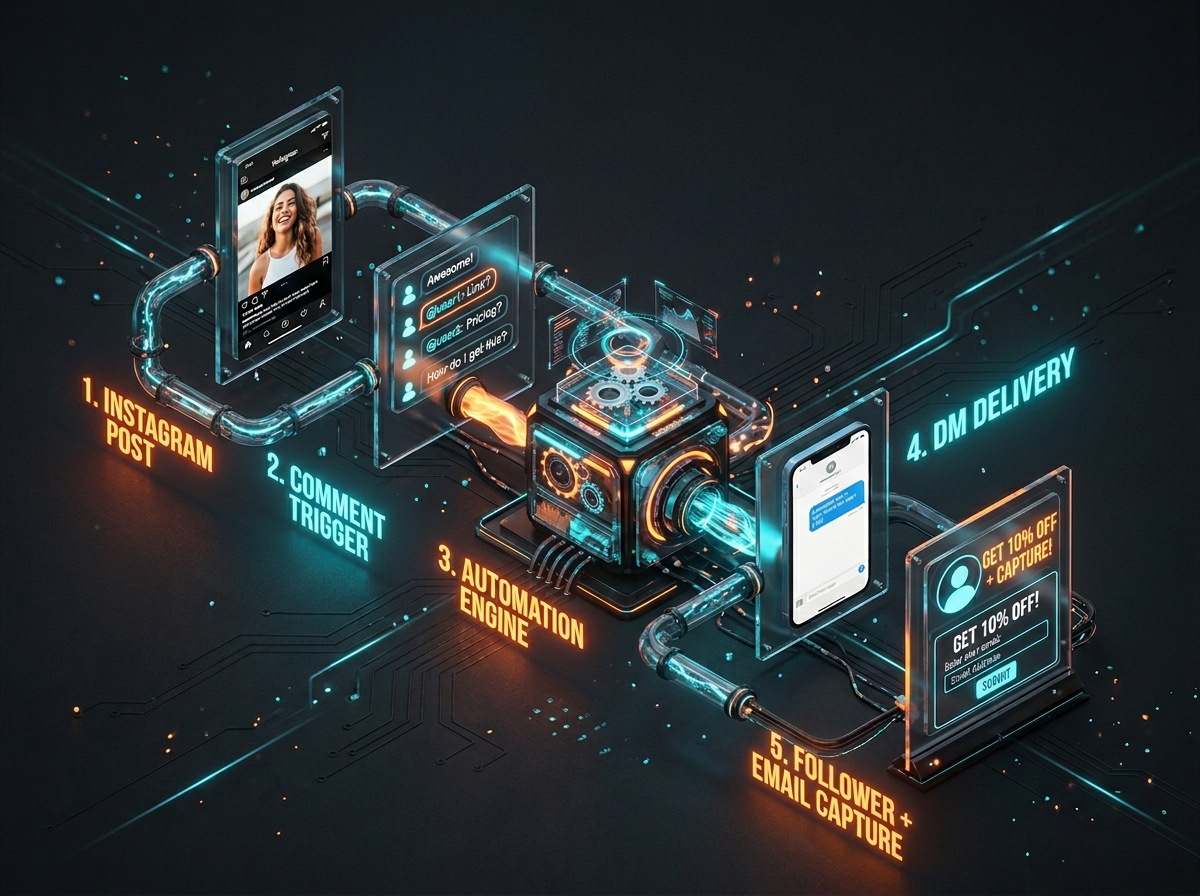
You do not need technical expertise or marketing experience to launch your first DM automation. This section walks through a complete setup on QuickDM from account connection to live automation in under 10 minutes. Follow these steps exactly and you will have a functioning comment-to-DM campaign before you finish reading.
[CTA: Create your first automation free on QuickDM — no credit card required → https://quickdm.app]Step 1 — Connect Your Instagram Professional Account
Navigate to QuickDM and create a free account using your email address — no credit card required. Once inside the dashboard, click "Connect Instagram Account" and authenticate through Meta's official OAuth portal. You will log in with your existing Instagram credentials on Meta's secure server (your password is never shared with QuickDM). Your Instagram account must be set to a Professional account (Creator or Business) to access the messaging API — personal accounts cannot use automation. If your account is currently personal, convert it to Professional in Instagram's settings before connecting. The conversion takes 30 seconds and is fully reversible. After authentication, QuickDM will display your connected account name and profile picture, confirming the connection is active. This entire step typically takes under 2 minutes.
Step 2 — Choose Your Trigger (Comment Keyword, Story Reply, DM Keyword)
Click "Create Automation" in the QuickDM dashboard. You will see trigger type options — select "Comment on Post or Reel" for your first automation. This is the highest-value trigger type for most creators because it captures everyone who comments on your content. Enter your trigger keyword in the text field — this is the word users must comment to receive your automated DM. Choose a keyword relevant to your offer: "GUIDE" for lead magnets, "SHOP" for product catalogues, "OFFER" for discount codes, "LINK" for affiliate links. Keep it short (4–8 letters), memorable, and relevant to what you are delivering. Avoid common words like "yes" or "hi" that users might type accidentally — your keyword should require intentional action. Select which posts or Reels this automation should monitor — you can choose specific posts or apply it to all future posts. For your first campaign, apply it to your most recent high-performing post to maximise immediate results.
Step 3 — Write Your First Automated Reply
In the message composition field, write the DM that users will receive when they comment your trigger keyword. The best automated DMs have three characteristics: they deliver the promised value immediately, they include a clear call-to-action, and they sound human. A template structure that works: "Hey [first name]! Here is the [resource] you requested: [link]. [One sentence of context]. [Optional: soft CTA]." For example: "Hey [first name]! Here is my free Instagram growth guide: [link]. This covers the exact strategy I used to reach 50K followers. Let me know what you think!" The personalisation token [first name] inserts the recipient's Instagram name, making the message feel individually sent. Include your link using full URLs — Instagram DMs make links clickable automatically. Test your message by sending it to yourself using QuickDM's preview feature before going live. A broken link or typo in an automated message will be sent to hundreds or thousands of users — the preview step prevents public embarrassment.
Step 4 — Enable Follow-Gating (Optional but Recommended)
Follow-gating is one of the most powerful features in Instagram automation because it converts DM recipients into followers. When enabled, QuickDM checks whether the commenter follows your account before delivering the promised content. If they do not follow you, the DM politely asks them to follow first: "Hey [first name]! To get your [resource], follow my account and I will send it right over!" Once they follow, the automation delivers the content automatically — no manual intervention needed. On QuickDM's free plan, you can collect up to 100 followers through follow-gating. On Pro, the limit is removed. For creators focused on audience growth, follow-gating typically increases follower conversion by 40–60% compared to delivering content without requiring a follow. Enable this feature by toggling the "Require Follow" switch in your automation settings. You can disable it later if you prefer open access for specific campaigns.
Step 5 — Go Live and Monitor
Toggle your automation to "Active" and publish a new post or Reel with a caption that instructs users to comment your trigger keyword. Example caption: "Want my free Instagram growth guide? Comment GUIDE below and I will send it to your DMs!" Monitor your QuickDM dashboard for the first hour to confirm DMs are sending correctly and the link is functioning. Check the analytics tab to track delivery count, open rate (if trackable links are used), and click-through rate on your delivered link. For your first campaign, expect a comment-to-DM conversion rate of 60–80% — not every commenter will receive the DM due to privacy settings, but most will. If you are on the free plan, watch your hourly DM count to understand how quickly you approach the 20 DMs/hour limit. If you consistently hit the limit within the first few days, you have strong product-market fit and should upgrade to Pro. Read our 5-step Instagram DM automation setup guide for advanced optimisation techniques once your basic campaign is running.
Instagram Automation Safety — Is It Legal? Will You Get Banned?
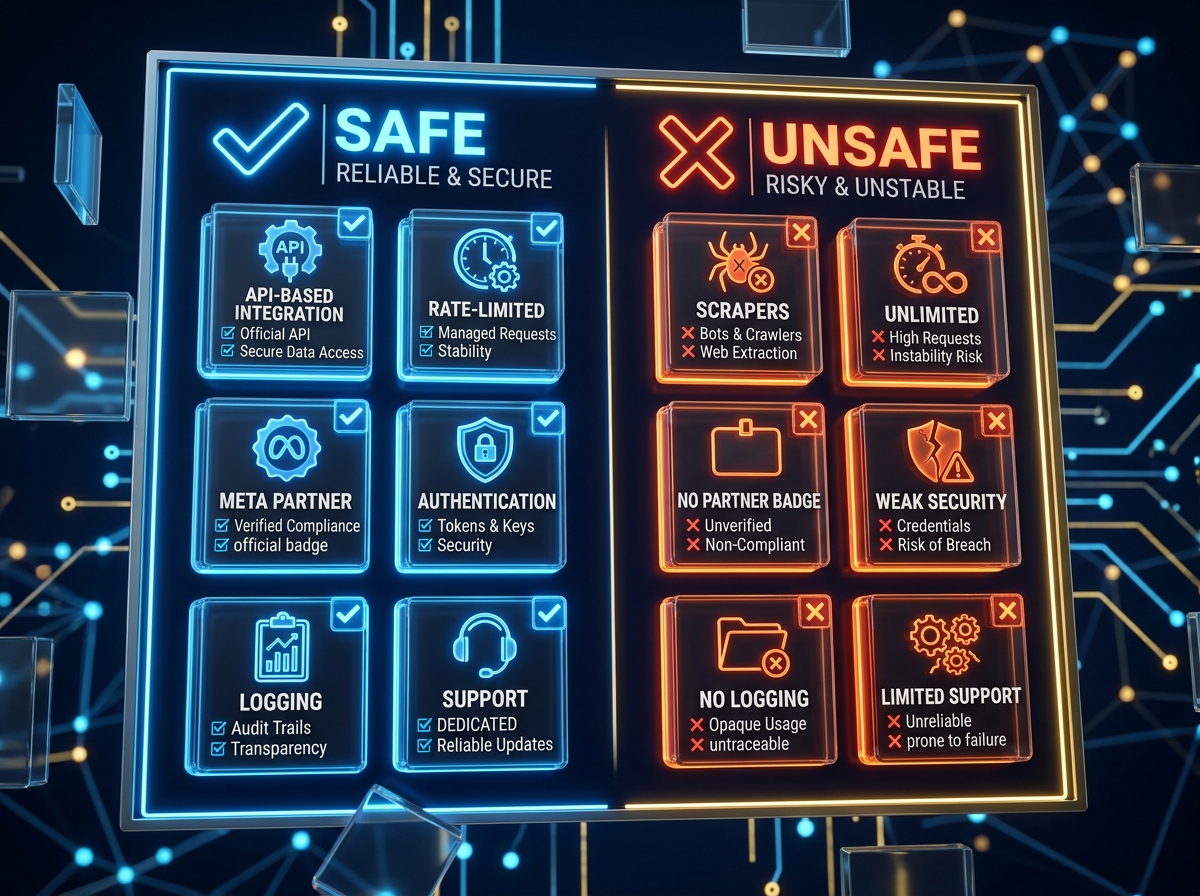
The most common question we hear from creators considering DM automation is some variation of "Will this get my account banned?" The honest answer is: it depends entirely on which tool you use and how you use it. API-based automation through official Meta Business Partners is safe, legal, and within Instagram's rules. Non-API automation through password-based scrapers is unsafe, against Instagram's Terms of Service, and carries significant ban risk. This section explains the difference in detail.
Instagram's Official Policy on Automation
Instagram's Terms of Service and Platform Policy distinguish between permitted and prohibited automation. Permitted automation includes tools that connect through the official Instagram Graph API and Business Platform, operate within documented rate limits, and require user consent through actions like commenting a keyword or sending a DM. Prohibited automation includes tools that scrape data, use fake accounts, send unsolicited messages to non-followers, or attempt to circumvent rate limits through credential sharing or browser automation. The key distinction is consent: when a user voluntarily comments "LINK" on your post, they are explicitly requesting the content you offer. Sending them a DM in response to that request is a service, not spam. When a tool sends unsolicited DMs to thousands of users who never engaged with your content — as mass-DM tools like Inflact do — that is spam under any reasonable definition and violates Instagram's Community Guidelines. Understanding this distinction is critical for both legal compliance and account safety.
API-Based vs Non-API Automation — The Key Safety Line
The technical dividing line between safe and unsafe automation is the connection method. API-based tools like QuickDM, ManyChat, LinkDM, and CreatorFlow connect to Instagram through the official Graph API using OAuth authentication. This is the same secure connection protocol used by Adobe, Canva, Later, and thousands of other legitimate Instagram integrations. Your password is never shared, all activity is logged and auditable by Meta, and the tools operate within rate limits that Meta itself defines. Non-API tools like Inflact require your Instagram username and password. They operate by logging into your account through simulated browsers or mobile emulators, then performing actions (liking, following, DMing) that mimic human behaviour. These techniques are explicitly against Instagram's Terms of Service. Instagram's detection systems — which have become significantly more sophisticated in 2026 — identify these patterns through device fingerprinting, behaviour analysis, and IP monitoring. The Instagram automation ban wave 2026 has demonstrated that Meta is actively enforcing these policies with increasing aggressiveness.
Signs Your Automation Tool Is Unsafe
Several warning signs indicate an automation tool is operating outside Instagram's official framework. First, if the tool asks for your Instagram password rather than redirecting you to Instagram's official login page, it is using non-API methods — never provide your password. Second, if the tool promises "unlimited DMs" or delivery speeds that exceed Meta's documented rate limits (750 private replies/hour), it is either lying about its capabilities or using prohibited circumvention techniques. Third, if the tool offers mass DM outreach to users who have never engaged with your content, it is facilitating spam. Fourth, if the tool lacks verified Meta Business Partner status and cannot provide documentation of its API-based connection method, exercise extreme caution. Fifth, if user reviews mention frequent account blocks, action limitations, or unexplained suspensions associated with the tool, these are symptoms of non-compliant operation. When evaluating any tool, request documentation of its API compliance methodology — legitimate providers will share this transparently.
What "Meta Business Partner" Actually Means
Meta Business Partner status is an official designation granted by Meta to companies that meet technical, business, and compliance standards for building on Facebook and Instagram platforms. The certification process involves technical verification that the partner uses official APIs correctly, business verification of company legitimacy, and ongoing compliance monitoring. There are different partner specialisations — some partners focus on ads, some on messaging, some on commerce. For DM automation tools, the relevant designation is typically the "Business Messaging Partner" category within the broader Meta Business Partner programme. Both QuickDM and ManyChat hold this designation, as do Chatfuel, InstantDM, and SetSmart. When a tool displays the Meta Business Partner badge, it indicates that Meta has verified the company's technical implementation and business practices — not a guarantee of quality or value, but a strong signal of API compliance and account safety. Tools without this badge either have not applied for certification or have failed to meet Meta's standards, which should be a significant concern for any business protecting its Instagram presence.
Frequently Asked Questions
These are the most common questions we receive about Instagram automation tools, pricing, safety, and setup. Each answer is self-contained — you do not need to read the full article to understand the response.
Which is the cheapest Instagram DM automation tool?
QuickDM is the cheapest Instagram DM automation tool in 2026. The paid Pro plan costs ₹399 per month for India and $10 per month globally — both the lowest price points among all reviewed tools. QuickDM also offers the most generous free plan with unlimited automations, 20 DMs per hour, follow-gating, and email collection at no cost. The next cheapest competitor is InstantDM at $9.99 per month globally (approximately ₹833 for Indian users), which is more than double QuickDM's India price.
Is there a truly free Instagram DM automation tool?
Yes — QuickDM offers a genuinely free forever plan with unlimited automation rules, 20 DMs per hour, follow-gating for up to 100 followers, and email collection for up to 100 contacts. No credit card is required and there is no expiration date. CreatorFlow (500 DMs/month) and LinkDM (1,000 DMs/month) also offer functional free plans, though both exclude follow-gating and email collection. ManyChat's free plan with 25 contacts is effectively a trial, not a usable free tier.
Which Instagram automation tool is best for India?
QuickDM is the best Instagram automation tool for India because it is the only tool with native INR pricing at ₹399 per month. It is headquartered in Mumbai, supports UPI and domestic payment methods, and is built around Indian creator and D2C brand workflows. All competitors charge in USD (or EUR for Inrō), making them 2–10× more expensive after conversion. QuickDM also supports regional language DM templates through Unicode text.
What is the difference between comment-to-DM automation and DM keyword triggers?
Comment-to-DM automation sends a direct message when someone comments a specific keyword on your post or Reel. DM keyword triggers fire when someone sends a specific word in a direct message to your account inbox. Comment-to-DM typically generates higher volume because it captures every commenter on your content. Both are supported by QuickDM and most leading automation tools.
How many DMs can you send per hour on Instagram without getting banned?
Meta's official Private Replies API allows up to 750 private replies per hour per account for comment triggers. The Send API for direct messages allows 100 calls per second. Safe tools like QuickDM stay well below these limits — QuickDM Pro sends 185 DMs per hour, approximately 25% of the official cap. Any tool claiming "unlimited DMs" is misrepresenting Meta's rate limits.
What does "Meta Business Partner" mean for an automation tool?
Meta Business Partners are officially recognised by Meta for building on Instagram and Facebook APIs. This certification means the tool uses official API connections rather than scraping or password-based bots, significantly reducing account ban risk. QuickDM, ManyChat, Chatfuel, InstantDM, and SetSmart all hold this designation.
Is Instagram automation safe in 2026?
API-based Instagram automation is safe when used within Meta's rate limits and Terms of Service. The risk comes from non-API tools that use password logins, browser scraping, or mass cold-DM outreach — all of which violate Instagram's rules and risk permanent account suspension. Stick to official Meta Business Partner tools and avoid any service promising "unlimited DMs."
Why did ManyChat become so expensive?
ManyChat uses per-contact billing, meaning your cost scales with your active contact count. In 2026, ManyChat reduced its free tier from 1,000 to 25 contacts. On the Pro plan ($29/month base, 2,500 contacts), each contact above your tier costs $0.05/month [Source: manychat.com/pricing, verified June 2026]. A viral Reel bringing 3,000 commenters can increase your monthly bill from $29 to $54 or higher, with the elevated cost persisting as long as those contacts remain active.
Can I automate Instagram DMs for my eCommerce store?
Yes — Instagram DM automation is highly effective for eCommerce. Common workflows include sending product catalogue links when customers comment on posts, delivering discount codes through follow-gating, collecting emails for abandoned cart recovery, and routing order enquiries to your support team. QuickDM's free plan supports all of these workflows at zero cost.
What is follow-gating on Instagram?
Follow-gating is an automation feature that delivers promised content — a discount code, download link, or lead magnet — only after the user follows your account. It exchanges valuable content for a follow action, making it a powerful follower growth mechanism. QuickDM offers follow-gating on its free plan (up to 100 followers) and without limits on Pro.
What is the difference between an AI chatbot and a rule-based DM automation tool?
A rule-based tool sends pre-written responses based on trigger keywords — comment "LINK" and receive a specific message. An AI chatbot uses language models to generate dynamic responses and handle open-ended conversations. Most creators find rule-based automation sufficient; AI chatbots add cost and complexity and are primarily useful for high-ticket sales teams and coaches.
How does CreatorFlow's pricing compare to ManyChat's?
CreatorFlow charges based on DM volume (messages sent), not per active contact. CreatorFlow Pro costs $15/month for 5,000 DMs. ManyChat charges per contact, meaning viral growth can multiply your bill overnight. For high-volume creators, CreatorFlow's model is substantially more affordable than ManyChat's equivalent tiers.
Can I collect email addresses through Instagram DM automation?
Yes — tools like QuickDM allow email collection within the DM flow. A user comments on your post, receives a DM asking for their email in exchange for a lead magnet, and enters their address directly within Instagram. QuickDM collects up to 100 emails on the free plan; Pro removes this limit.
Which Instagram automation tools work for multiple Instagram accounts?
CreatorFlow Growth ($30/month) supports up to 5 Instagram accounts. LinkDM Pro ($19/month) supports up to 3 accounts. ManyChat paid plans support multiple channels and accounts. QuickDM's multi-account support should be verified directly with their team as features evolve.
Do Instagram automation tools work for Reels and Stories, or only regular posts?
Most API-based tools support comment-to-DM triggers on both regular posts and Reels. Story reply automation — sending a DM when someone replies to your Story — is supported by QuickDM, ManyChat, LinkDM, and CreatorFlow. Story mention automation (when someone tags you in their Story) varies by tool; confirm with each provider's current documentation.
Our Verdict — Which Instagram Automation Tool Should You Use in 2026?
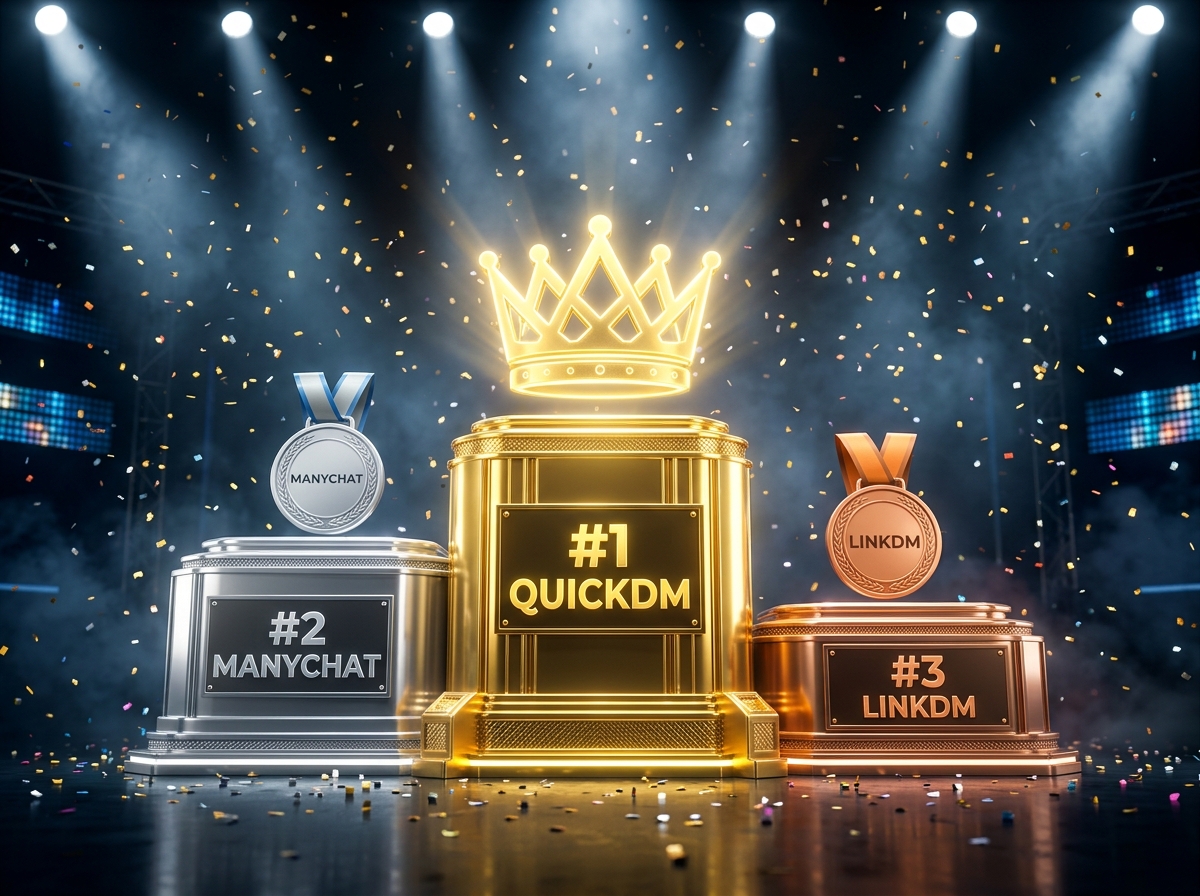
After testing all 11 tools against a live Instagram professional account, evaluating pricing models, verifying Meta API compliance, and modelling costs for multiple creator profiles, our recommendations are clear. The right tool depends on your specific situation, but for the majority of users reading this article, one option stands above all others.
[CTA: Start free on QuickDM — the #1 ranked Instagram automation tool for 2026 → https://quickdm.app]Best Overall for India: QuickDM
QuickDM wins our top ranking for 2026 because it solves the problems that actually matter to Instagram creators and D2C brands. At ₹399 per month for India ($10 global), it is the cheapest tool in this comparison. Its free plan is the only one that is genuinely usable for real business workflows — unlimited automations, 20 DMs per hour, follow-gating, and email collection with no credit card and no expiration. It is the only tool with native INR pricing and UPI-friendly billing. It is headquartered in Mumbai and built for Indian creator workflows, including regional language DM support. The flat-rate pricing eliminates the viral-growth bill shock that makes ManyChat punishingly expensive. The 185 DMs per hour Pro rate sits safely within Meta's API limits while providing capacity for all but celebrity-tier accounts. For solo creators, nano-influencers, D2C brands, and small agencies in India, QuickDM delivers everything you need at a price that respects the Indian market. Start free on QuickDM with no credit card required.
Best for Multi-Channel Enterprise: ManyChat
ManyChat remains the best choice for enterprise marketing teams that need unified automation across Instagram, Facebook Messenger, WhatsApp, and SMS. Its visual flow builder is unmatched in sophistication, and its analytics dashboard provides the attribution data that enterprise marketers require. However, these capabilities come at a steep price: $14–65+/month with per-contact billing that escalates unpredictably. The free tier reduction to 25 contacts in 2026 makes ManyChat inaccessible for budget-conscious creators. Choose ManyChat only if you genuinely need multi-channel orchestration and have the budget to absorb viral growth costs. Read our ManyChat vs QuickDM comparison for a detailed feature breakdown.
Best Budget Comment-to-DM: LinkDM
LinkDM earns third place for its clean focus on comment-to-DM automation, broad trigger coverage (including ad comments), and transparent volume-based pricing. At $19/month for 25,000 DMs, it offers solid value for creators who need higher free-tier volume than CreatorFlow provides. However, the lack of INR pricing, absence of follow-gating on the free tier, and $19 price point (4× QuickDM's India price) make it less competitive for the Indian market specifically. Global creators focused purely on comment-to-DM link delivery should consider LinkDM; Indian creators should choose QuickDM.
Best AI Conversations: Inrō or SetSmart
For users who need AI-powered conversational automation rather than rule-based trigger responses, Inrō and SetSmart serve different segments. Inrō at €12.99/month provides accessible AI chatbot functionality with CRM integration and lead scoring — suitable for small businesses that need basic conversational AI. SetSmart at $99/month offers premium AI call booking and high-ticket sales qualification — justified only when your average deal value exceeds ₹50,000. Both use per-contact or flat-rate pricing that avoids ManyChat's bill shock, but neither offers INR pricing. For Indian coaches and consultants, start with QuickDM for lead magnet delivery and manually qualify leads until volume justifies an AI upgrade.
Final Recommendation by Budget
If your budget is zero: QuickDM Free — the only genuinely usable free plan. If your budget is under ₹500/month: QuickDM Pro at ₹399 — the cheapest paid option with the highest safety margins. If your budget is ₹1,000–2,000/month: Consider whether you need features QuickDM lacks; for most users, QuickDM Pro still provides the best value. If your budget is ₹5,000+/month: You can afford ManyChat Pro or consider CreatorFlow Growth for multi-account agency use. If your budget is ₹8,000+/month and you sell high-ticket services: SetSmart may justify its price through AI call booking. For 90% of creators and D2C brands reading this article, QuickDM at ₹399/month or free provides everything needed to monetise Instagram engagement safely and effectively.